


Spiritual Development & Mysticism
Spiritual development is a phrase we hear often, yet it can mean very different things to different people. For some, it involves deepening their religious faith. For others, it is about becoming more mindful, compassionate, or connected to the world around them. From my perspective, spiritual development is less about adopting a particular belief system and more about embarking on a lifelong journey of self-discovery. It is the gradual process of understanding who we are, identifying the values that guide us, and striving each day to become wiser, kinder, and more authentic. Mysticism has long provided one of the richest paths for that journey, inviting us to explore not only the world around us but also the world within.
One of the reasons I have always been drawn to mysticism is that it places personal experience at the heart of spiritual growth. Rather than simply accepting ideas because they have been passed down through tradition, mysticism encourages thoughtful exploration. It asks us to reflect, question, observe, and learn from our own experiences. This does not mean rejecting established wisdom; quite the opposite. Mysticism often builds upon centuries of spiritual teaching while encouraging us to discover how those teachings can become personally meaningful in our own lives.
Throughout history, mystical traditions have appeared in nearly every major religion. Christian contemplatives, Jewish Kabbalists, Islamic Sufis, Buddhist monks, Hindu sages, and countless others have all sought a closer relationship with the sacred through prayer, meditation, contemplation, and ethical living. Although their beliefs differ in important ways, they frequently describe similar qualities emerging through their practice: greater compassion, humility, gratitude, patience, and inner peace. These shared themes suggest that spiritual development is less about belonging to a particular tradition and more about cultivating qualities that enrich both our own lives and the lives of those around us.
Self-awareness is perhaps the first and most important step in spiritual development. It is remarkably easy to move through life reacting automatically to situations without fully understanding why we think, feel, or behave as we do. Mysticism gently encourages us to pause and observe ourselves with honesty rather than judgement. What motivates our decisions? What fears shape our behaviour? Which habits support our wellbeing, and which hold us back? By asking these questions regularly, we begin to develop a clearer understanding of ourselves and become more intentional in the way we live.
Meditation & Spiritual Development
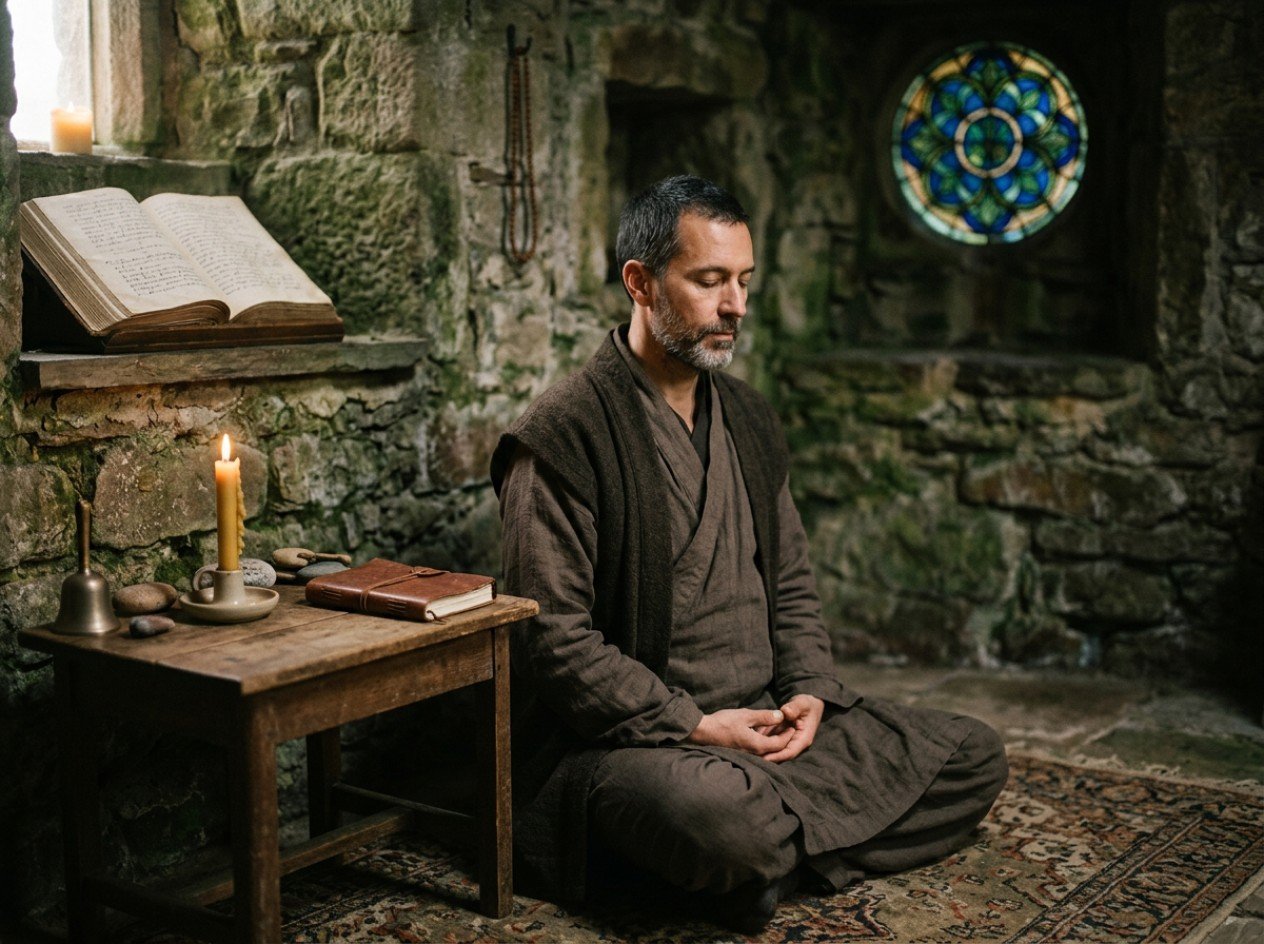
Meditation is one of the most valuable tools available for cultivating this awareness. Sitting quietly for even a few minutes each day allows us to notice the constant flow of thoughts passing through our minds. Rather than trying to stop thinking altogether, meditation teaches us to observe our thoughts without immediately reacting to them. Over time, this simple practice creates greater emotional balance, helping us respond thoughtfully rather than impulsively when challenges arise. From a mystical perspective, these moments of stillness create space for deeper wisdom to emerge.
Another important aspect of spiritual development is learning to embrace uncertainty. Modern life often encourages us to seek quick answers and definitive conclusions. Mysticism offers a different perspective. It reminds us that some of life's greatest questions cannot be fully answered because they are meant to be explored rather than solved. Questions about purpose, meaning, love, and the nature of existence continue to inspire reflection throughout our lives. Becoming comfortable with mystery allows curiosity to replace fear and humility to replace certainty.
Symbolism also plays an important role in mystical practice. Throughout history, symbols have helped people reflect upon spiritual truths that ordinary language struggles to express. The Tree of Life, the lotus flower, the labyrinth, the Moon, the circle, fire, water, and countless other symbols appear repeatedly across cultures because they speak to universal aspects of the human experience. Rather than offering fixed meanings, these symbols encourage contemplation, allowing each individual to discover insights that resonate with their own stage of life and personal journey.
Journaling, Spiritual Development & Mysticism
Journaling is another simple yet remarkably effective practice for spiritual growth. Writing allows us to explore thoughts that may otherwise remain hidden beneath the surface of our busy lives. Recording reflections after meditation, noting recurring dreams, expressing gratitude, or simply writing honestly about our daily experiences helps us identify patterns that become clearer over time. Looking back through old journal entries often reveals how much personal growth has already taken place, even when we may not have noticed it in the moment.
Compassion lies at the very heart of every genuine spiritual tradition. Mysticism consistently reminds us that personal growth is not measured by extraordinary experiences or intellectual knowledge alone, but by the way we treat other people. Becoming more patient, forgiving, generous, and understanding reflects genuine spiritual maturity. Every interaction becomes an opportunity to practise kindness. Every disagreement becomes an opportunity to listen more carefully. Every challenge becomes an invitation to respond with wisdom rather than anger.
Nature has always been one of humanity's greatest spiritual teachers. Spending time outdoors reminds us that growth follows natural rhythms rather than rigid schedules. Trees do not rush to mature. Rivers do not hurry toward the sea. The changing seasons demonstrate that periods of activity, rest, renewal, and transformation all have their place. Many mystical traditions encourage regular time in nature because it gently restores perspective and reminds us that we are part of something far larger than ourselves.
Spiritual development also involves learning to release what no longer serves us. This may include old resentments, limiting beliefs, unhealthy habits, or unrealistic expectations. Letting go is rarely easy, yet it creates space for new opportunities and healthier ways of thinking to emerge. Mysticism teaches that transformation often requires both courage and patience. Growth is not about becoming someone entirely different but about removing the obstacles that prevent our authentic selves from emerging.
One lesson I have found particularly valuable is the importance of gratitude. It is easy to focus upon what is missing from our lives while overlooking the countless blessings already present. A daily gratitude practice gradually changes the way we perceive the world. Instead of constantly seeking fulfilment somewhere in the future, we begin to recognise moments of beauty, kindness, friendship, learning, and peace that already surround us. Gratitude does not ignore life's difficulties; it simply broadens our perspective so that challenges are balanced by appreciation.
Spiritual Development & Mystical Experiences
Many people assume that spiritual development requires dramatic mystical experiences. In reality, meaningful growth usually occurs quietly and gradually. It appears in greater patience during difficult conversations, increased compassion toward strangers, improved self-discipline, healthier relationships, and a deeper appreciation for everyday life. These subtle changes often have a far greater impact than moments of dramatic inspiration because they become woven into the fabric of who we are.
Mysticism also encourages lifelong learning. Reading widely, exploring different philosophical traditions, studying sacred texts, engaging in thoughtful conversations, and remaining open to new perspectives all contribute to spiritual maturity. Curiosity keeps the mind active while humility reminds us that there is always more to discover. Genuine wisdom is rarely accompanied by arrogance; instead, it is often characterised by a quiet willingness to continue learning.
Ultimately, spiritual development is not a destination but a continuous journey. There is no point at which we can declare ourselves complete or fully enlightened. Every experience offers another opportunity to learn, every relationship teaches something about ourselves, and every challenge invites us to grow. Mysticism provides a gentle framework for navigating that journey by encouraging reflection, mindfulness, compassion, gratitude, and openness to life's enduring mysteries. For me, its greatest gift is not that it promises certainty, but that it reminds us we already possess the capacity to become wiser, kinder, and more deeply connected with ourselves, with others, and with the world around us. Spiritual development is simply the lifelong practice of allowing those qualities to emerge, one thoughtful step at a time.