Rituals, Symbolism & Mysticism
Throughout human history, people have sought ways to understand both the visible and invisible aspects of existence. Long before science offered explanations for many of life's mysteries, civilizations looked to symbols, rituals, and spiritual practices as ways of making sense of the world around them. These traditions helped individuals celebrate life's milestones, cope with uncertainty, connect with nature, and express their deepest hopes and beliefs. At the heart of many of these practices lies mysticism—the search for a deeper understanding of reality and a more meaningful connection with the sacred, however it may be understood.
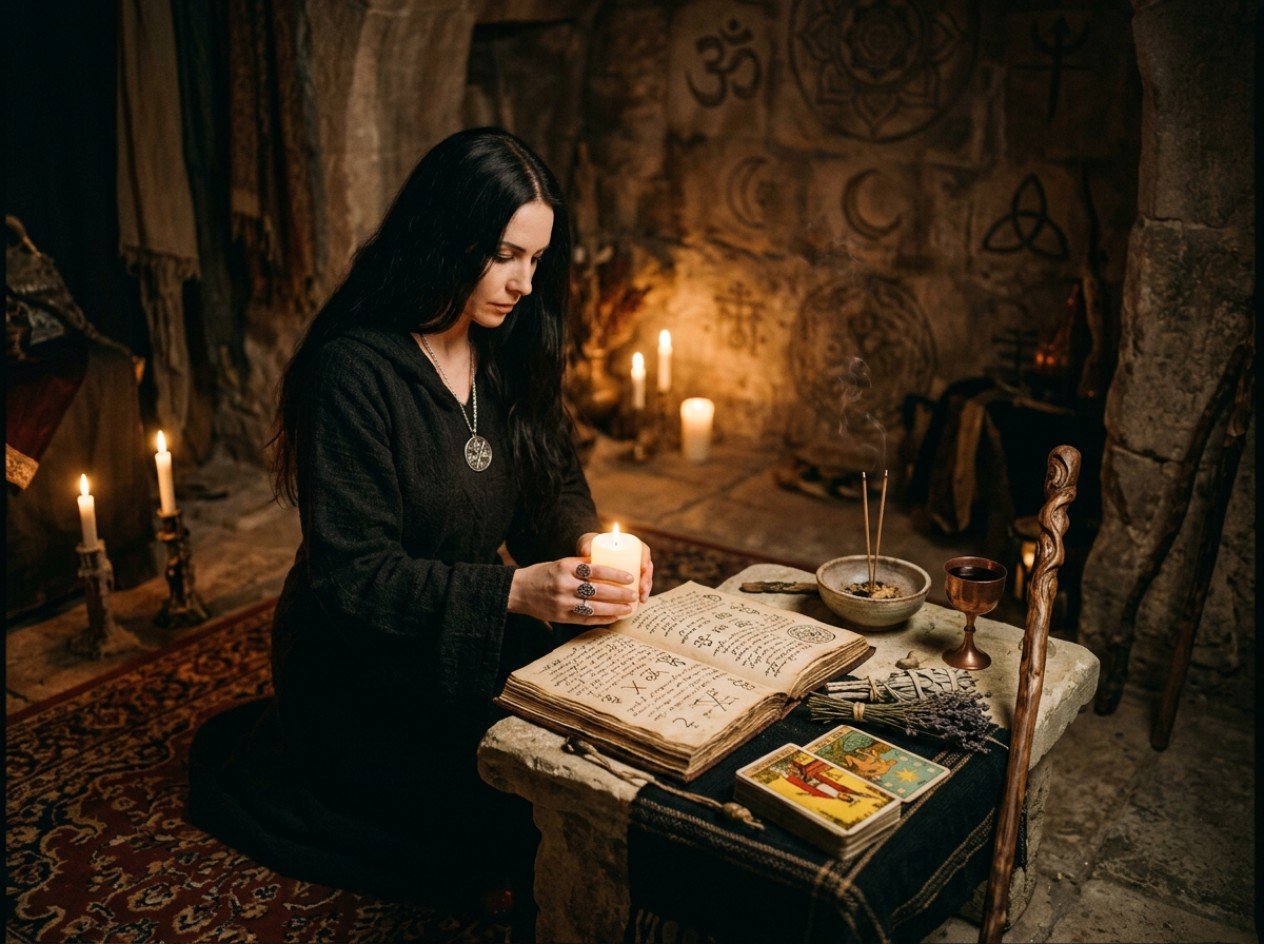
Rituals and symbols have always played an essential role in this journey. While they vary enormously across cultures and religions, they share a common purpose: to communicate ideas and experiences that words alone often struggle to express. Whether lighting a candle, walking a labyrinth, observing the changing phases of the Moon, meditating in silence, or marking the changing seasons, rituals provide moments of intention that encourage us to pause, reflect, and reconnect with ourselves.
Rituals & Mysticism
A ritual is far more than simply repeating a series of actions. At its heart, a ritual is an intentional activity that carries personal or spiritual meaning. Some rituals have been passed down through generations and are closely connected to religious traditions, while others are deeply personal, created by individuals to mark important moments in their own lives. A morning meditation, writing in a gratitude journal, taking a mindful walk through nature, or even making tea in complete silence can become meaningful rituals when performed with awareness and purpose.
Mysticism often embraces these practices because they encourage a shift in consciousness. Rather than rushing through life on autopilot, rituals invite us to become fully present. They remind us that ordinary actions can become extraordinary when infused with intention. A simple candle flame may become a symbol of hope, wisdom, remembrance, or renewal, depending on the meaning we bring to it.
Symbols & Mysticism
Symbols are equally important within mystical traditions. Unlike ordinary signs, which usually have a single, straightforward meaning, symbols often carry multiple layers of significance. A tree, for example, can represent growth, resilience, wisdom, family, or the connection between heaven and earth. Water may symbolize purification, emotion, transformation, or the unconscious mind. The Sun can represent life, illumination, vitality, or spiritual awakening. These meanings are not fixed but evolve through culture, personal experience, and the context in which the symbol appears.
One of the fascinating aspects of symbolism is how similar images emerge in cultures separated by vast distances and centuries of history. The circle frequently symbolizes wholeness, eternity, and unity. Mountains often represent spiritual ascent and revelation. Serpents may signify wisdom, healing, renewal, or transformation. Such recurring themes have inspired philosophers, artists, psychologists, and mystics to wonder whether humanity shares a universal symbolic language that reflects common patterns of thought and experience.
Many mystical traditions teach that these symbols speak directly to parts of the human mind that operate beyond ordinary logic. Dreams, myths, religious stories, works of art, and even everyday experiences often contain symbolic elements that invite contemplation rather than immediate explanation. Instead of asking, "What does this symbol objectively mean?" many mystics ask, "What does this symbol mean to me at this moment in my life?" This personal approach encourages reflection rather than rigid interpretation.
Throughout history, ritual and symbolism have appeared in nearly every spiritual tradition. Ancient Egyptians filled their temples with symbolic imagery representing creation, balance, and the afterlife. Jewish mysticism developed the symbolic Tree of Life as a way of contemplating humanity's relationship with the Divine. Christian traditions use bread, wine, light, and water as powerful spiritual symbols. Hinduism and Buddhism employ mandalas, sacred geometry, and meditation practices to guide contemplation and inner transformation. Indigenous cultures around the world continue to honour seasonal ceremonies that strengthen relationships between people, nature, and community.
Despite their diversity, these traditions often point toward similar themes. They encourage humility, compassion, gratitude, balance, self-awareness, and a recognition that life possesses dimensions extending beyond material concerns. Mysticism is not necessarily about acquiring hidden knowledge or extraordinary powers. More often, it is about developing a deeper awareness of ourselves, our relationships, and our place within the wider universe.
Modern mysticism frequently adapts these ancient ideas for contemporary life. Many people incorporate rituals into their daily routines without belonging to any particular religious tradition. Meditation, mindfulness, journaling, Tarot reflection, observing lunar cycles, working with meaningful objects, creating vision boards, or spending intentional time in nature all represent ways that individuals seek greater awareness and purpose. Whether viewed spiritually, psychologically, or simply as opportunities for mindful reflection, these practices encourage people to slow down and engage more thoughtfully with their lives.
Psychology, Rituals & Symbolism
Psychology has also contributed significantly to our understanding of symbols and ritual. Swiss psychiatrist Carl Jung proposed that many symbols arise from shared patterns within the human psyche, which he described as archetypes. According to Jung, recurring images found in dreams, myths, and religious traditions express universal aspects of human experience. While not everyone agrees with every aspect of his theories, Jung's work continues to influence modern discussions about dreams, mythology, spirituality, and personal growth.
Importantly, rituals and symbols need not be dramatic or elaborate to be meaningful. The most powerful rituals are often the simplest. Taking a few moments each morning to set an intention, expressing gratitude before a meal, lighting a candle to remember someone, or pausing to appreciate the changing seasons can all become quiet reminders of what matters most. These practices encourage mindfulness by creating small moments of reflection within the rhythm of everyday life.
One reason rituals continue to resonate today is that they help provide structure during times of uncertainty and transition. People naturally create rituals to celebrate births, weddings, graduations, anniversaries, and achievements. Likewise, rituals help us process grief, loss, and major life changes by providing familiar actions that offer comfort and continuity. Mystical traditions recognise that these moments often become opportunities for personal transformation and deeper understanding.
Symbolism also enriches our appreciation of art, literature, architecture, mythology, and even the natural world. A sunrise may symbolize hope and new beginnings. Autumn leaves can remind us of change and the beauty of life's cycles. A bridge may represent transition between one stage of life and another. Once we begin noticing symbolic patterns, we often discover that they surround us in both ancient traditions and everyday experience.
Ultimately, rituals, symbolism, and mysticism invite us to look beyond appearances and ask deeper questions about meaning, purpose, and connection. They encourage us to cultivate curiosity rather than certainty, reflection rather than haste, and awareness rather than distraction. Whether approached from a spiritual, philosophical, psychological, or cultural perspective, these traditions offer valuable opportunities to understand ourselves more fully and appreciate the richness of the human experience.
As you continue exploring the world of mysticism, you will encounter countless rituals, symbols, and traditions, each shaped by its own history and culture. Rather than searching for one definitive interpretation, allow them to inspire thoughtful reflection and personal discovery. The true value of mysticism often lies not in providing all the answers, but in encouraging us to ask better questions—questions that deepen our understanding of ourselves, strengthen our relationships with others, and foster a greater sense of wonder about the world we share.