


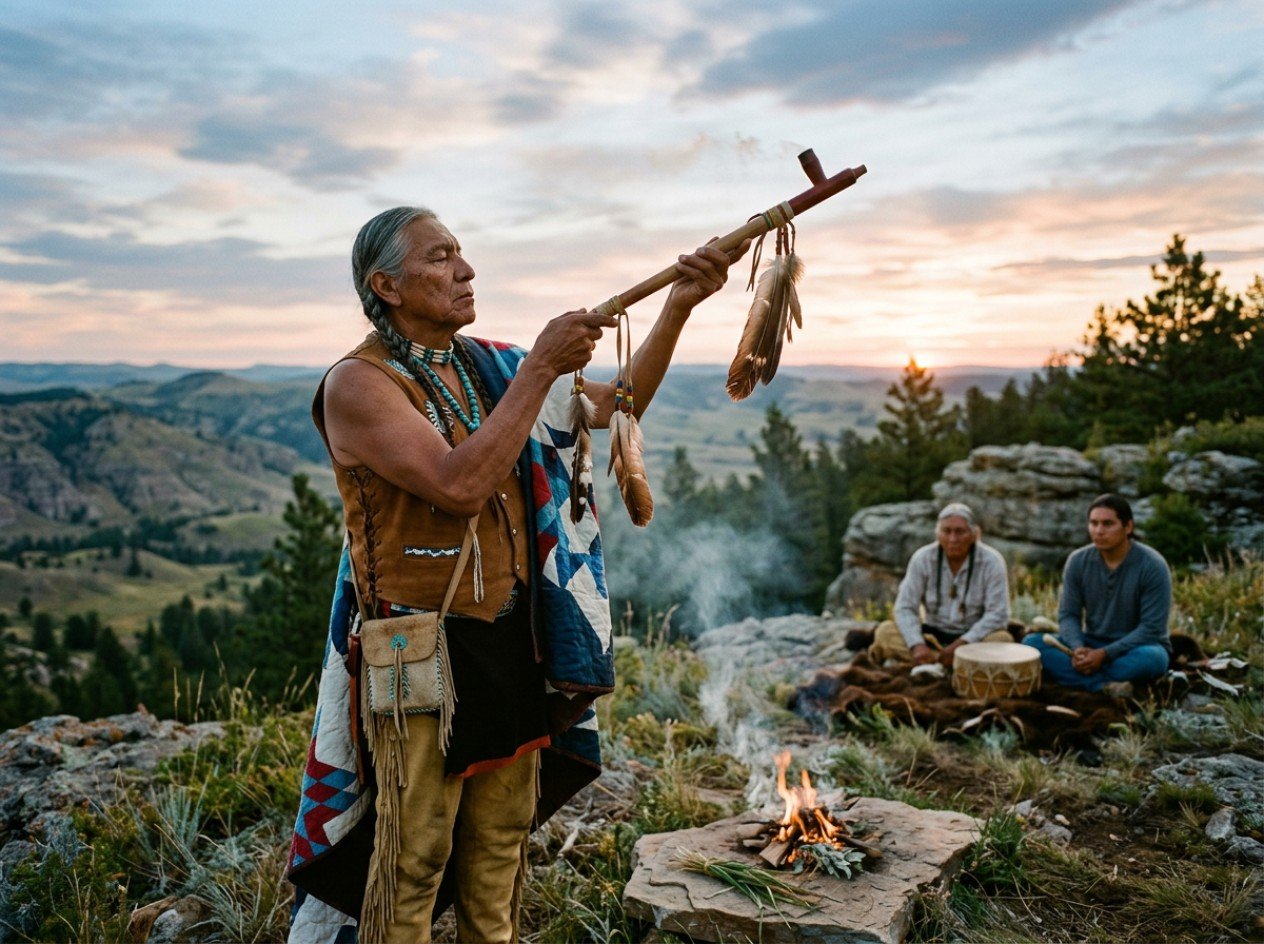
Native American Mysticism
Living in the American Midwest, I've always felt a deep connection to the landscape. Wide prairies, winding rivers, changing seasons, and expansive skies have a way of reminding us that we are part of something much larger than ourselves. Perhaps that's one reason I've long been fascinated by the religious traditions of Native American peoples. Although the cultures, languages, and spiritual beliefs of Native Nations are wonderfully diverse, they often share certain themes that continue to resonate today: respect for nature, gratitude, community, balance, and the understanding that every living thing exists within a web of relationships. At a time when many people feel disconnected from one another and from the natural world, Native American spiritual traditions offer timeless insights that encourage a more thoughtful and harmonious way of living.
It is important to begin by acknowledging that there is no single "Native American religion." Before European contact, North America was home to hundreds of distinct nations, each with its own language, customs, ceremonies, and spiritual traditions. The beliefs of the Navajo differ from those of the Lakota, the Haudenosaunee (Iroquois), the Cherokee, the Hopi, the Ojibwe, the Pueblo peoples, and countless others. While similarities certainly exist, each tradition developed within its own historical, geographical, and cultural setting. Any attempt to describe Native American spirituality must therefore remain broad while respecting this remarkable diversity.
Despite these differences, many Native traditions share an understanding that the world is alive with spirit. Mountains, rivers, forests, animals, winds, and even particular rocks may possess spiritual significance. This does not necessarily mean that every object is worshipped. Rather, many Indigenous traditions understand the natural world as animated by sacred presence. Humanity is not viewed as standing above nature but as participating within it. People, animals, plants, and the land itself exist within relationships characterised by mutual dependence and respect.
Native American Rituals & Ceremonies
This worldview contrasts with certain modern assumptions that separate humanity from nature. Contemporary society often treats the natural environment primarily as a resource to be managed or exploited. Many Native traditions instead encourage reciprocity. If we receive something from the Earth, we also carry responsibilities toward it. Hunting, gathering, farming, and using natural resources traditionally involved ceremonies expressing gratitude and recognising that taking life required humility rather than entitlement. These practices remind us that sustainability is not merely an environmental policy but also a spiritual value.
One concept frequently encountered across many Native cultures is the importance of balance. Health is understood not simply as the absence of illness but as harmony among the physical, emotional, mental, spiritual, social, and environmental aspects of life. When balance is disturbed, suffering may follow. Restoring harmony often involves ceremonies, prayer, community support, reflection, and reconnection with both nature and tradition. Modern holistic healthcare increasingly recognises similar principles, acknowledging that wellbeing involves far more than physical symptoms alone.
Another recurring theme is gratitude. Many Native communities begin ceremonies by offering thanks—not only for food and family but also for water, sunlight, animals, plants, ancestors, and future generations. Among the Haudenosaunee, for example, the Thanksgiving Address expresses appreciation for numerous elements of creation before important gatherings. Rather than treating gratitude as an occasional emotion, these traditions often cultivate it as a daily way of seeing the world. Psychological research today supports the idea that regular gratitude practices contribute positively to emotional wellbeing, illustrating an interesting convergence between ancient wisdom and modern science.
Native American Beliefs & The Natural World
The natural world also serves as a profound teacher within many Native traditions. Animals frequently possess symbolic significance, not because they are viewed simply as metaphors but because careful observation of nature reveals qualities worthy of admiration. The eagle may represent vision and spiritual perspective, the buffalo abundance and generosity, the wolf cooperation and family, the bear strength and introspection, while the turtle symbolises patience, endurance, and longevity in many traditions. These symbolic associations vary among different nations, yet they encourage close attention to the lessons offered by the living world.
Storytelling occupies a central place within Indigenous spirituality. Before written records became widespread, history, ethics, ecological knowledge, and spiritual teachings were transmitted orally across generations. Creation stories explained humanity's relationship with the Earth. Animal stories conveyed moral lessons. Historical narratives preserved collective memory while strengthening community identity. Importantly, these stories were not merely entertainment. They served as educational tools, helping young people understand responsibility, courage, humility, generosity, and respect. Even today, storytelling remains one of humanity's most effective ways of transmitting values across generations.
Ceremony likewise plays an essential role in many Native spiritual traditions. Sweatlodge ceremonies, healing rituals, seasonal celebrations, vision quests, dances, and community gatherings each possess distinct meanings depending upon the nation and cultural context. These ceremonies often emphasise purification, gratitude, renewal, healing, or preparation for important life transitions. While specific practices should always be approached respectfully and within their proper cultural traditions, they illustrate the universal human need for rituals marking significant moments in life.
One practice that has received considerable public attention is the vision quest, particularly among certain Plains nations. Traditionally, this involved periods of solitude, fasting, prayer, and reflection undertaken under appropriate cultural guidance. The purpose was not simply to seek mystical experiences but to deepen one's understanding of personal responsibility, purpose, and relationship with the spiritual world. Modern individuals often seek similar opportunities for reflection through retreats, wilderness experiences, or silent meditation, demonstrating that the desire for periods of intentional solitude remains deeply human.
Community forms another cornerstone of many Indigenous belief systems. Modern Western culture frequently emphasises individual achievement and personal independence. Native traditions often place greater emphasis pon collective wellbeing and reciprocal responsibility. Decisions are frequently evaluated according to their effects upon family, community, and future generations rather than immediate individual benefit alone. One frequently quoted principle—although not universally attributable to every Native nation—is the idea of considering the impact of decisions upon the seventh generation yet to come. Whether historical or symbolic, this principle encourages long-term thinking that remains highly relevant today.
Native American Beliefs & Respect For Elders
Respect for elders also distinguishes many Native communities. Elders are valued not merely because of their age but because they carry experience, memory, cultural knowledge, and wisdom accumulated over decades. In many contemporary societies, older adults are sometimes marginalised despite possessing valuable insights. Native traditions remind us that intergenerational learning strengthens communities by connecting youthful energy with mature perspective.
Native American spirituality also teaches profound respect for silence. During my conversations with Indigenous educators over the years, I have often been struck by the value placed upon careful listening before speaking. Silence creates space for observation, reflection, and thoughtful response. In today's world of constant digital communication, this lesson feels especially important. We often rush to express opinions without first cultivating understanding. Silence, properly appreciated, becomes not emptiness but attentive presence.
Of course, Native American religious traditions have also endured profound historical hardship. Colonisation, forced displacement, broken treaties, residential and boarding schools, suppression of ceremonies, and attempts at cultural assimilation caused immense suffering across many Indigenous communities. Despite these challenges, countless traditions survived through remarkable resilience, oral transmission, and cultural renewal. Today, many Native nations continue revitalising languages, ceremonies, educational programmes, and spiritual practices while balancing tradition with contemporary life.
One lesson modern society might draw from Native spirituality concerns our relationship with the environment. Climate change, habitat destruction, declining biodiversity, and pollution have highlighted the consequences of treating nature solely as an economic resource. Indigenous philosophies reminding us of reciprocity, stewardship, and gratitude offer valuable ethical perspectives alongside scientific approaches to environmental conservation. They encourage us to view ourselves not as owners of the Earth but as temporary caretakers.
Another valuable lesson involves interconnectedness. Many Native traditions understand that actions affecting one part of creation inevitably influence the whole. Contemporary ecology, systems theory, and environmental science increasingly recognise similar patterns of interdependence. Human health depends upon healthy ecosystems, clean water, stable climates, thriving biodiversity, and cooperative communities. Ancient spiritual insights and modern scientific understanding occasionally arrive at remarkably similar conclusions through different pathways.
As someone who has spent much of my life studying comparative religion, I have come to appreciate that Native American spirituality offers less a set of abstract doctrines than a way of living attentively. Gratitude before meals, respect for elders, careful stewardship of nature, thoughtful listening, generosity toward neighbours, and awareness of future generations all represent practices rather than merely beliefs. Their enduring relevance lies precisely in their practicality.
It is also essential that non-Indigenous people approach Native spiritual traditions with humility and respect. These beliefs belong to living communities rather than existing simply as sources of inspiration for others. Learning about Indigenous philosophies should encourage appreciation rather than appropriation. Genuine respect involves listening carefully to Native voices, supporting cultural preservation, and recognising the historical experiences that have shaped Indigenous communities across North America. Native American religious beliefs remind us that spirituality extends beyond places of worship into every aspect of daily life. How we treat the Earth, how we care for one another, how we honour our ancestors, how we prepare for future generations, and how we express gratitude all become sacred responsibilities. Although these teachings emerged within diverse Indigenous cultures over countless generations, their central message remains profoundly relevant. In an increasingly fast-paced and fragmented world, they invite us to slow down, pay attention, cultivate gratitude, respect the living world, and recognise that our wellbeing is inseparable from the wellbeing of the communities and landscapes that sustain us. That may be one of the most enduring spiritual lessons Native American traditions continue to offer the modern world.