
Being A Pagan In The Modern World
Living in a small town on the coast of Maine has taught me that the changing seasons are more than entries on a calendar. Here, winter announces itself with quiet determination, spring arrives almost shyly, summer fills the forests with birdsong, and autumn transforms the landscape into brilliant shades of crimson and gold. Spending so much time surrounded by nature has deepened my appreciation for spiritual traditions that invite us to observe these rhythms rather than merely measure them. Among these traditions is modern Paganism, a broad and diverse collection of spiritual paths that draw inspiration from nature, ancient cultures, seasonal cycles, and personal experience. Although popular culture has often misunderstood Paganism, modern practitioners generally describe it as a thoughtful, ethical, and deeply personal way of engaging with both the natural world and the sacred.
Misconceptions About Paganism
One of the first misconceptions worth addressing is that there is no single religion called Paganism. The word "Pagan" functions as an umbrella term encompassing numerous traditions, including Wicca, Druidry, Heathenry, Hellenism, Kemetic spirituality, eclectic Paganism, and many other nature-based spiritual paths. Some Pagans honour ancient deities, while others understand these figures symbolically. Some work within organised groups known as covens or groves, while many practise entirely on their own. Consequently, asking how to become a modern Pagan resembles asking how to become a musician: there are many styles, instruments, and approaches, each sharing certain common themes while remaining distinct.
Perhaps the most consistent characteristic across modern Pagan traditions is reverence for nature. Rather than viewing humanity as separate from the natural world, many Pagans understand people as participants within a living, interconnected ecosystem. Forests, rivers, oceans, wildlife, changing seasons, and celestial cycles become sources of both practical knowledge and spiritual reflection. This does not necessarily mean that nature itself is worshipped. Rather, it is often regarded as revealing something sacred about existence. Observing the world carefully becomes a spiritual discipline in its own right.
If someone asked me where to begin exploring Pagan spirituality, I would not recommend purchasing elaborate ritual tools or memorising complex ceremonies. Instead, I would suggest spending time outdoors. Walk through woodlands without headphones. Observe how tides shape the shoreline. Notice the changing position of the Moon. Watch migrating birds arrive and depart with the seasons. Keep a notebook describing what you observe. Ancient spiritual traditions developed through generations of close attention to the natural world. Developing that same habit of observation remains one of the most authentic starting points available.
Modern Paganism
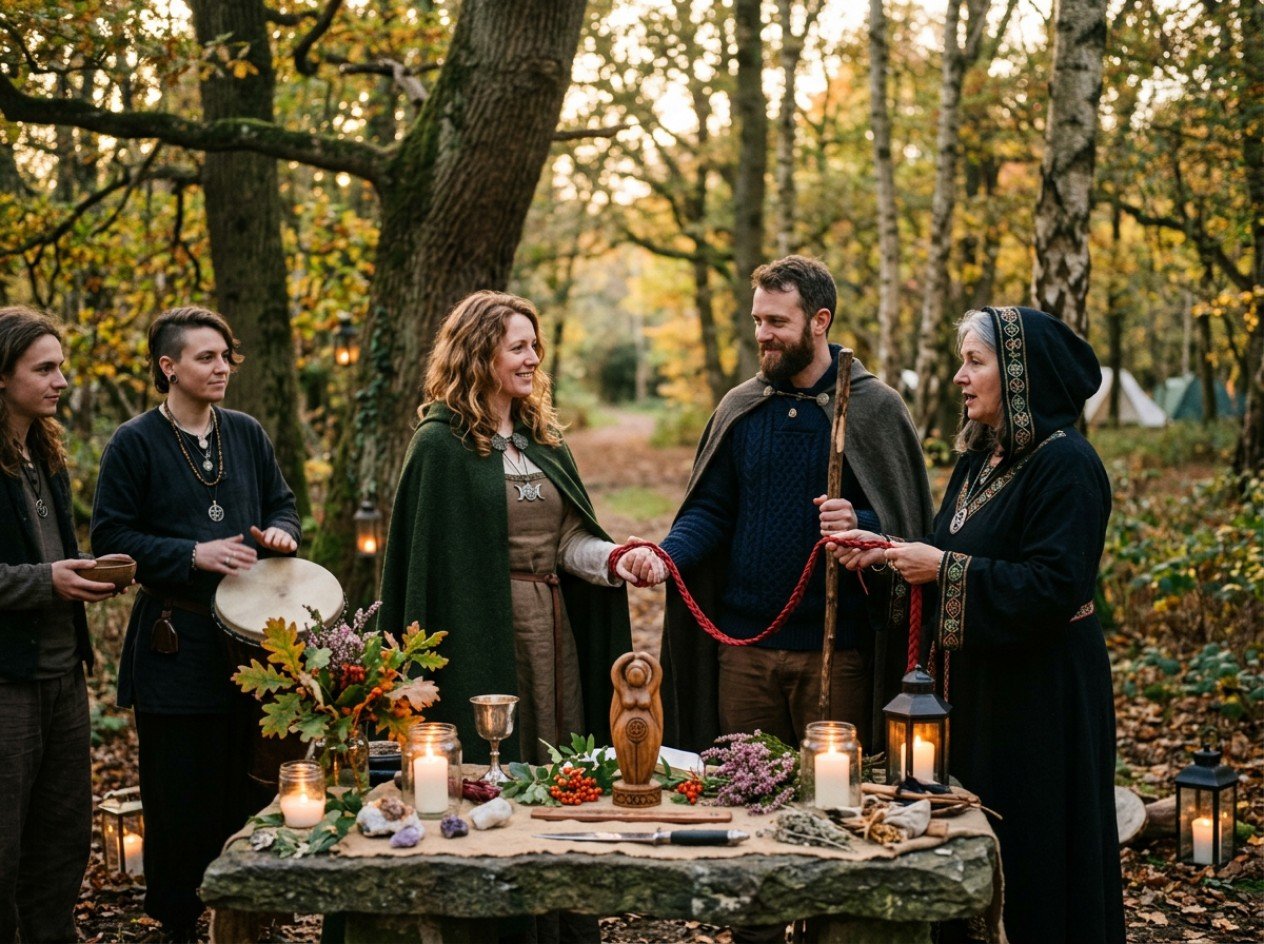
Modern Paganism also encourages awareness of seasonal cycles. Many traditions celebrate the Wheel of the Year, a calendar consisting of eight festivals marking solstices, equinoxes, and important agricultural transitions. Samhain reflects remembrance and the completion of the harvest. Yule celebrates the winter solstice and the gradual return of light. Imbolc welcomes early signs of spring. Ostara honours renewal at the spring equinox. Beltane celebrates growth and abundance. Litha marks the summer solstice, Lughnasadh the first harvest, and Mabon the autumn equinox. Participating in these seasonal observances encourages people to reconnect with rhythms often overlooked in contemporary urban life.
Importantly, celebrating these festivals need not involve elaborate rituals. Lighting a candle during Yule, planting flowers around Beltane, preparing seasonal meals at Lughnasadh, or taking reflective walks during Samhain all represent meaningful ways of marking the changing year. The significance lies less in strict ceremonial accuracy than in cultivating awareness and gratitude for nature's continual cycles.
Another defining characteristic of modern Paganism is its emphasis upon personal responsibility. Unlike certain religious traditions built around formal creeds or universally accepted doctrines, many Pagan paths encourage individuals to develop their own informed understanding through study, reflection, and experience. This freedom can initially feel both liberating and challenging. Without a single authoritative text governing every aspect of belief, practitioners bear greater responsibility for thinking carefully about their own spiritual lives.
That responsibility extends to ethics. One widely recognised principle within Wicca is the Wiccan Rede: "An it harm none, do what ye will." Although interpreted differently by different practitioners, it encourages thoughtful consideration of how our choices affect other people, animals, and the natural environment. Other Pagan traditions emphasise honour, hospitality, reciprocity, courage, or stewardship. While ethical systems vary, responsible conduct remains central across most forms of contemporary Paganism.
The Symbolic Richness of Paganism
Many people become curious about Paganism because of its symbolic richness. The Moon, Sun, trees, rivers, mountains, animals, and the classical elements all occupy important places within ritual and meditation. Symbols function not as magical objects possessing independent power but as reminders directing attention toward deeper truths. A candle may symbolise hope or wisdom. Flowing water may represent emotional healing or continual change. An ancient oak may remind us of endurance, patience, and resilience. Learning to think symbolically enriches spiritual reflection by connecting everyday experiences with larger patterns of meaning.
Meditation and contemplation also play valuable roles within many Pagan traditions. Some practitioners meditate quietly beneath trees, others visualise seasonal landscapes, while some combine breathing exercises with gratitude or reflective journaling. The specific technique matters less than the cultivation of attentive awareness. Modern neuroscience increasingly confirms that mindfulness practices support emotional regulation, concentration, and psychological wellbeing. While contemporary science explains these benefits differently from traditional spirituality, both perspectives recognise the value of intentional reflection.
Reading widely represents another important step. Because modern Paganism encompasses such diverse traditions, newcomers benefit from exploring history alongside contemporary practice. Studying ancient Celtic, Greek, Roman, Norse, Egyptian, or Indigenous traditions helps distinguish historical evidence from modern reconstruction. Academic scholarship complements personal spirituality by encouraging intellectual honesty while deepening appreciation for the remarkable diversity of human religious experience.
One caution I always offer students concerns historical accuracy. Modern Paganism draws inspiration from ancient traditions but rarely claims to reproduce them perfectly. Many rituals practised today have been thoughtfully adapted for contemporary society rather than copied directly from antiquity. Recognising this distinction strengthens rather than weakens modern Paganism because it encourages transparency about historical evidence while allowing living traditions to continue evolving.
Community can also enrich spiritual exploration. Many towns and cities host Pagan discussion groups, seasonal celebrations, educational organisations, or public festivals where newcomers may learn respectfully from experienced practitioners. At the same time, solitary practice remains entirely valid. Some individuals discover that quiet reflection in nature provides all the spiritual community they require, while others value regular gatherings with like-minded people. There is no universally correct approach.
Paganism & Curiosity
One aspect of Paganism I find particularly appealing from an academic perspective is its encouragement of curiosity. Questions are welcomed rather than discouraged. Why does this ritual exist? What historical evidence supports it? How has this symbol changed over time? Such inquiry reflects the spirit of genuine scholarship while remaining fully compatible with personal spirituality. Healthy religious traditions need not fear thoughtful investigation.
Environmental stewardship has become increasingly important within contemporary Pagan communities. Because many traditions regard the Earth as sacred or spiritually significant, caring for ecosystems naturally becomes an expression of religious practice. Recycling, habitat restoration, sustainable gardening, reducing waste, and supporting conservation efforts allow spirituality to extend beyond private belief into public responsibility. In an era of climate change and biodiversity loss, these commitments possess both practical and ethical importance.
Many newcomers also wonder about ritual tools such as candles, chalices, incense, crystals, herbs, or ceremonial knives known as athames. While these objects certainly appear within some traditions, they should never be mistaken for the essence of Pagan spirituality. Throughout history, many people practised meaningful spiritual lives using little more than open skies, natural landscapes, and sincere intention. Tools may support ritual, but they do not replace wisdom, compassion, or thoughtful reflection.
Likewise, beliefs concerning deities vary considerably. Some Pagans understand gods and goddesses as distinct spiritual beings. Others interpret them as symbolic representations of natural forces or psychological archetypes. Still others combine multiple perspectives. Modern Paganism generally allows greater theological diversity than many organised religions, encouraging respectful dialogue rather than rigid uniformity.
Dreams, intuition, and creativity also receive considerable attention. Many practitioners keep dream journals, observe lunar cycles, compose seasonal poetry, paint landscapes, or create handcrafted ritual objects. Creative expression becomes another way of participating in the sacred rhythms of life. Rather than separating art from spirituality, many Pagans understand creativity itself as a sacred gift deserving cultivation.
Perhaps the greatest challenge facing modern Pagans resembles that confronting many religious communities today: maintaining depth within a culture increasingly characterised by distraction. Social media often reduces complex traditions to attractive photographs or brief quotations. Authentic spiritual growth, however, rarely occurs quickly. It develops gradually through observation, study, ethical living, meaningful relationships, and consistent practice. The quiet discipline of paying attention, to nature, to one's own character, and to the needs of other, ultimately matters far more than collecting impressive ritual accessories or memorising specialised terminology.
Living here in coastal Maine continually reminds me why nature-based spirituality retains its enduring appeal. Watching fog roll across the harbour before sunrise, hearing loons calling across quiet lakes, or seeing the first wildflowers emerge after a long winter naturally encourages humility. We are participants within a living world far older and more intricate than ourselves. Modern Paganism invites us not to escape that reality but to engage it more fully, recognising that the changing seasons, the turning stars, the forests, rivers, and oceans all possess lessons for those willing to observe carefully. Becoming a modern Pagan is less about adopting a fixed identity than cultivating a particular way of living. It means developing reverence for nature, embracing personal responsibility, celebrating seasonal rhythms, acting ethically, remaining intellectually curious, and recognising that spirituality often unfolds through ordinary experiences rather than extraordinary events. Whether one ultimately embraces Wicca, Druidry, another Pagan path, or simply develops a deeper appreciation for the natural world, the journey begins with the same simple invitation: slow down, pay attention, and rediscover your place within the larger tapestry of life that surrounds us every day.