


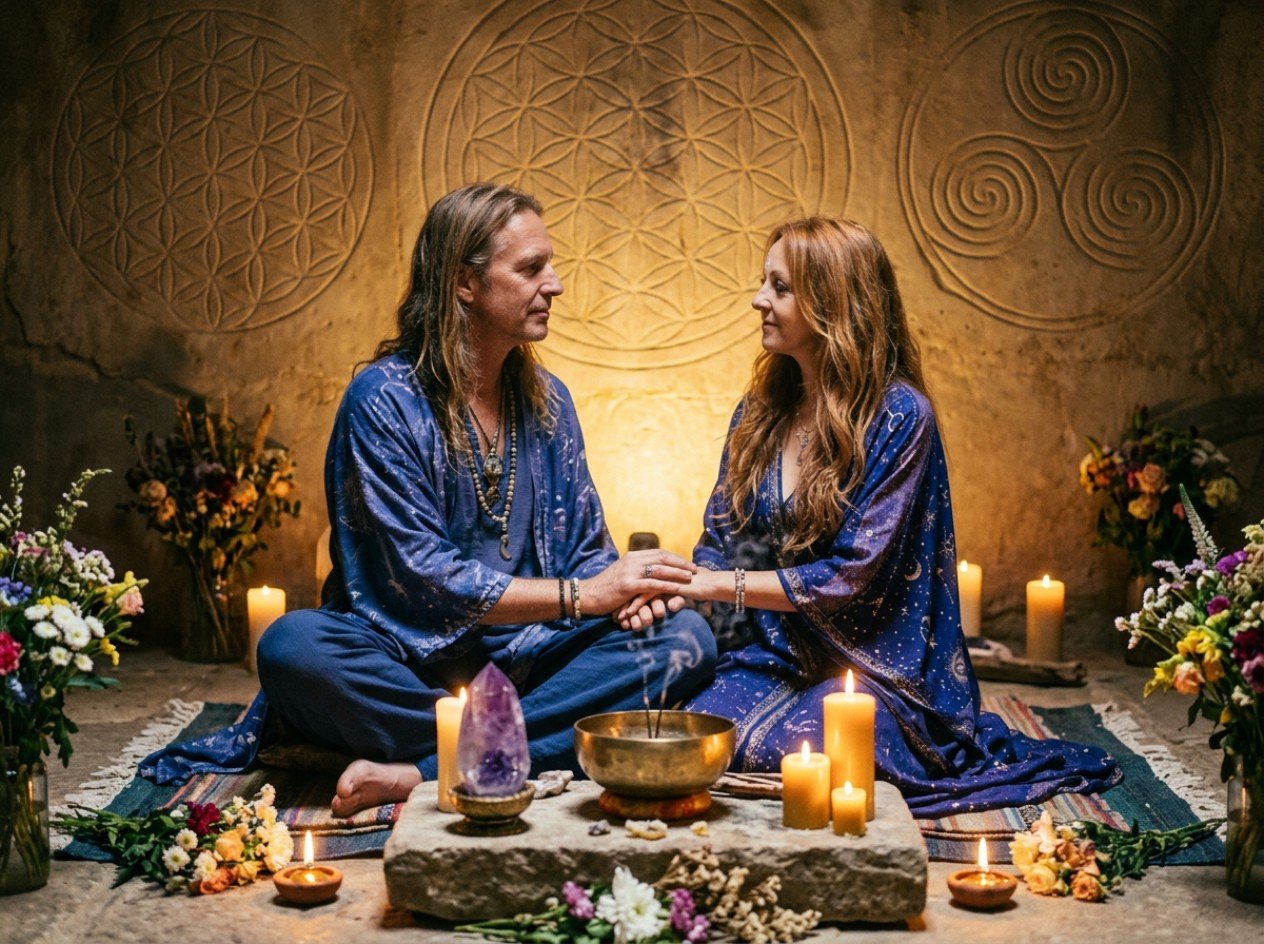
Using Rites & Rituals To Improve Intimacy
One of the most beautiful discoveries my partner and I have made over the years is that intimacy isn't something that simply happens. It's something we intentionally create. Like tending a garden, a relationship flourishes when we regularly give it our attention, patience, curiosity, and care. Living together has taught me that lasting intimacy isn't built solely through grand romantic gestures or physical attraction. More often, it grows quietly through shared rituals, small, meaningful moments that remind us we are choosing one another, day after day. As someone who has long been fascinated by comparative spirituality, I've found it remarkable that many ancient mystical traditions understood this long before modern psychology began studying healthy relationships. Across cultures and centuries, sacred rituals were designed to deepen trust, emotional connection, mutual respect, and shared purpose. Although these traditions emerged within very different societies, many of their underlying principles remain surprisingly relevant today.
When we hear the word "ritual," it's easy to imagine elaborate ceremonies performed in temples or monasteries. Yet anthropologists generally define ritual much more broadly. A ritual is simply a meaningful action performed with intention. It transforms an ordinary activity into something symbolic. Lighting a candle before dinner, pausing to express gratitude before sleep, exchanging meaningful words before leaving for work, or sharing an uninterrupted evening walk can all become rituals. What distinguishes them from ordinary habits is not complexity but conscious attention.
Many ancient cultures recognised that human relationships require nurturing just as spiritual lives do. Rather than separating intimacy from spirituality, they often understood loving relationships as opportunities for personal transformation. The goal extended beyond romance alone. Healthy partnerships were believed to cultivate virtues such as patience, generosity, compassion, humility, and self-awareness. In many respects, these remain the same qualities that relationship researchers identify as supporting long-term satisfaction today.
Within Hindu traditions, particularly certain schools influenced by Tantra, intimate relationships were sometimes understood as opportunities to experience profound connection rather than merely physical pleasure. Modern popular culture often reduces Tantra to sexuality alone, but traditional Tantra encompasses a far broader spiritual philosophy. Meditation, breathing practices, mutual respect, attentive presence, and the recognition of the sacred within everyday life formed central themes. Partners were encouraged to become fully present with one another rather than distracted by performance, expectation, or self-consciousness.
One lesson my partner and I have borrowed from these traditions has nothing to do with exotic techniques. It's simply the practice of slowing down. Modern life encourages constant efficiency. We hurry through meals, conversations, and even moments of affection. Ancient contemplative traditions often suggest the opposite. When we deliberately slow our breathing, maintain eye contact without rushing, and truly listen before responding, something shifts. The conversation becomes less about exchanging information and more about sharing presence.
Ancient Egypt also associated love with sacred symbolism. The goddess Hathor represented love, beauty, music, fertility, joy, and celebration. Festivals honouring Hathor often included music, dancing, storytelling, and communal feasting. While modern relationships obviously exist within very different cultural contexts, the underlying principle remains meaningful. Shared joy strengthens emotional bonds. Singing together, dancing in the kitchen, attending concerts, or simply laughing freely all create positive emotional memories that help relationships weather more difficult seasons.
In classical Greece, philosophers often distinguished different forms of love. Eros referred to passionate attraction, while Philia described deep friendship, and Agape represented generous, self-giving love. Lasting intimacy usually requires all three qualities. Passion naturally changes over time, but friendship, kindness, admiration, and mutual support often deepen. Ancient philosophical traditions remind us that successful relationships involve much more than romantic chemistry alone. They flourish through shared values, intellectual companionship, and emotional generosity.
Many Indigenous cultures also emphasised the importance of shared ceremonies marking transitions within relationships. Seasonal festivals, communal dances, storytelling, and gratitude rituals strengthened not only individual couples but entire communities. These traditions recognised something contemporary psychology increasingly confirms: healthy relationships rarely exist in complete isolation. Supportive friendships, family connections, and community involvement contribute significantly to long-term relationship wellbeing.
One practice that appears across numerous mystical traditions is the sharing of meals with mindful attention. In Judaism, blessings before meals express gratitude for nourishment. Christian traditions often include prayers of thanksgiving. Buddhist communities frequently eat in silence to cultivate awareness. My partner and I have found that simply putting our phones away during dinner changes the entire atmosphere. Instead of treating meals as brief interruptions between other activities, they become opportunities to reconnect. Ancient rituals teach us that presence matters more than extravagance.
Another recurring theme involves gratitude. Many spiritual traditions encourage expressing appreciation regularly rather than assuming affection speaks for itself. Research by psychologists including Dr. John Gottman has similarly demonstrated that successful long-term relationships maintain a high ratio of positive interactions compared with negative ones. Gratitude interrupts the tendency to focus exclusively upon problems. Taking a few moments each evening to share one thing we appreciated about each other during the day has become one of the simplest yet most meaningful rituals in our home.
Celtic Rites & Rituals for Intimacy
Ancient Celtic traditions frequently celebrated seasonal festivals such as Beltane, associated with fertility, renewal, and the flourishing of life. Although modern couples need not recreate historical ceremonies, the broader principle remains inspiring. Creating seasonal rituals, a spring picnic, autumn hike, winter candlelit evening, or summer sunrise walk—helps relationships remain connected to the rhythms of nature. Living on the West Coast has reminded me repeatedly that the natural world possesses an extraordinary ability to slow us down and invite reflection.
Meditation also appears in numerous mystical traditions as preparation for deeper relationships. It might seem surprising that spending time alone quietly can strengthen intimacy, yet it makes perfect sense. Individuals who better understand their own emotions generally communicate more effectively. Meditation encourages awareness rather than impulsive reaction. Instead of responding immediately from frustration or defensiveness, we develop greater capacity to pause, breathe, and choose our words more thoughtfully.
Eye contact forms another surprisingly ancient ritual. Many contemplative traditions encourage seeing the divine within another person. Whether interpreted spiritually or psychologically, sustained, gentle eye contact fosters empathy and emotional attunement. It can initially feel surprisingly vulnerable because it requires genuine presence. Yet that vulnerability often strengthens trust. Occasionally my partner and I simply sit together quietly for a few minutes without speaking. It's remarkable how much communication occurs without words.
Story-Telling & Intimacy
Storytelling also plays a significant role in many traditional cultures. Couples naturally accumulate shared stories over years together—how they first met, challenges they overcame, places they travelled, difficult moments they survived, joyful memories they created. Retelling these stories strengthens relationship identity. Psychologists sometimes observe that couples with coherent, shared narratives often demonstrate greater resilience during stressful periods. Ancient cultures understood that stories preserve not only history but meaning.
Another lesson drawn from mystical traditions concerns forgiveness. Every lasting relationship involves misunderstandings, disappointments, and occasional hurt. Many religious traditions developed rituals of reconciliation because communities recognised that unresolved resentment gradually erodes trust. Forgiveness does not mean ignoring harmful behaviour or abandoning healthy boundaries. Rather, it reflects a willingness to repair relationships whenever possible through honesty, accountability, and compassion.
Silence deserves mention as well. We often imagine intimacy requiring constant conversation, yet some of the most peaceful moments my partner and I have shared involved simply sitting together watching the ocean or walking quietly beneath towering trees. Ancient contemplative traditions remind us that silence need not represent emotional distance. Sometimes it expresses comfort so complete that words become unnecessary.
Modern neuroscience offers interesting support for several of these ancient practices. Shared laughter, affectionate touch, eye contact, and expressions of gratitude all influence hormones associated with trust and emotional bonding, including oxytocin. Mindfulness practices reduce stress responses that might otherwise interfere with communication. While ancient practitioners described these benefits spiritually rather than neurologically, contemporary research increasingly demonstrates that intentional relationship rituals genuinely influence emotional wellbeing.
It's also important to recognise what ancient mystical intimacy was not. It was not about manipulation, magical control over another person, or achieving perfection. Authentic spiritual traditions consistently emphasised mutual respect, consent, honesty, and personal responsibility. Any teaching encouraging coercion, domination, or emotional dependence departs from the deeper ethical principles shared across many contemplative traditions.
Attention & Intimacy
Perhaps the greatest challenge modern couples face is not lack of love but lack of attention. We live surrounded by constant notifications, endless entertainment, demanding careers, and overflowing calendars. Relationships gradually become squeezed into whatever time remains. Ancient rituals quietly challenge this pattern. They remind us that intimacy grows where attention flows. Five uninterrupted minutes may strengthen a relationship more effectively than an entire distracted evening spent together.
One ritual my partner and I developed after years together is wonderfully simple. Before going to sleep, regardless of how busy or stressful the day has been, we spend a few minutes asking each other two questions: "What brought you joy today?" and "Is there anything you're carrying that you'd like me to know about?" Sometimes the answers are lighthearted. Sometimes they're difficult. But those few minutes create space for honesty before another busy day begins. I suspect many ancient traditions would recognise that practice immediately, even though we invented it ourselves. At its heart, it's simply intentional presence.
Ancient mystical rites designed to strengthen intimacy remind us that love flourishes through repeated acts of mindful attention rather than dramatic moments alone. Whether expressed through shared meals, gratitude, meditation, storytelling, forgiveness, seasonal celebrations, or quiet companionship, these practices encourage us to remain awake to one another. They teach that intimacy is not merely an emotion but an ongoing spiritual practice, a way of meeting another human being with curiosity, respect, compassion, and openness. Although our lives today differ enormously from those of the people who first developed these rituals, the human heart has changed remarkably little. We still long to be seen, understood, accepted, and loved. Perhaps that's why these ancient practices continue speaking so gently across the centuries, reminding us that the deepest forms of connection are built one intentional moment at a time.