Significant New Age Dates & Holidays
One of the things I appreciate most about New Age spirituality is that it encourages us to become more aware of the natural rhythms of the world around us. Living on the West Coast, where the changing seasons are reflected in blooming wildflowers, migrating whales, long summer evenings, and crisp autumn mornings, I've come to see the calendar as much more than a collection of dates. Within many New Age traditions, the year itself becomes a spiritual journey. Rather than focusing exclusively on historical events or religious observances, the New Age calendar follows the cycles of the Earth, the Sun, the Moon, and, for some practitioners, the planets. These recurring patterns provide opportunities for reflection, gratitude, renewal, and personal growth. Although there is no single official New Age calendar recognised by everyone, many spiritual communities celebrate similar seasonal festivals and celestial events that help people reconnect with nature, themselves, and the wider universe.
One of the defining characteristics of the New Age movement is its diversity. Unlike many established religions, New Age spirituality does not possess a central authority or universally accepted sacred calendar. Instead, it draws inspiration from numerous traditions including ancient Celtic festivals, astrology, Indigenous wisdom, Eastern philosophy, meditation, pagan practices, and contemporary spirituality. As a result, many practitioners choose to observe the dates that resonate most deeply with their own spiritual journey. This flexibility reflects one of the movement's central ideas: that spirituality is a personal path rather than a rigid system of prescribed beliefs.
New Age & The Solstices
Perhaps the most universally recognised dates within New Age spirituality are the four astronomical turning points of the year: the Spring Equinox, Summer Solstice, Autumn Equinox, and Winter Solstice. These events have been celebrated by cultures around the world for thousands of years because they represent visible markers in the Earth's annual journey around the Sun. Long before modern calendars existed, people relied upon these celestial events to guide agriculture, religious ceremonies, and community life.
The Spring Equinox, usually occurring around March 20th or 21st in the Northern Hemisphere, symbolises balance, renewal, and new beginnings. Day and night become nearly equal in length, representing harmony between light and darkness. For many New Age practitioners, this is a time to plant not only seeds in the garden but also intentions for personal growth. Meditation, journaling, vision boards, and ceremonies focused upon fresh starts are especially common during this period. Spiritually, the Spring Equinox reminds us that every ending eventually gives rise to a new beginning.
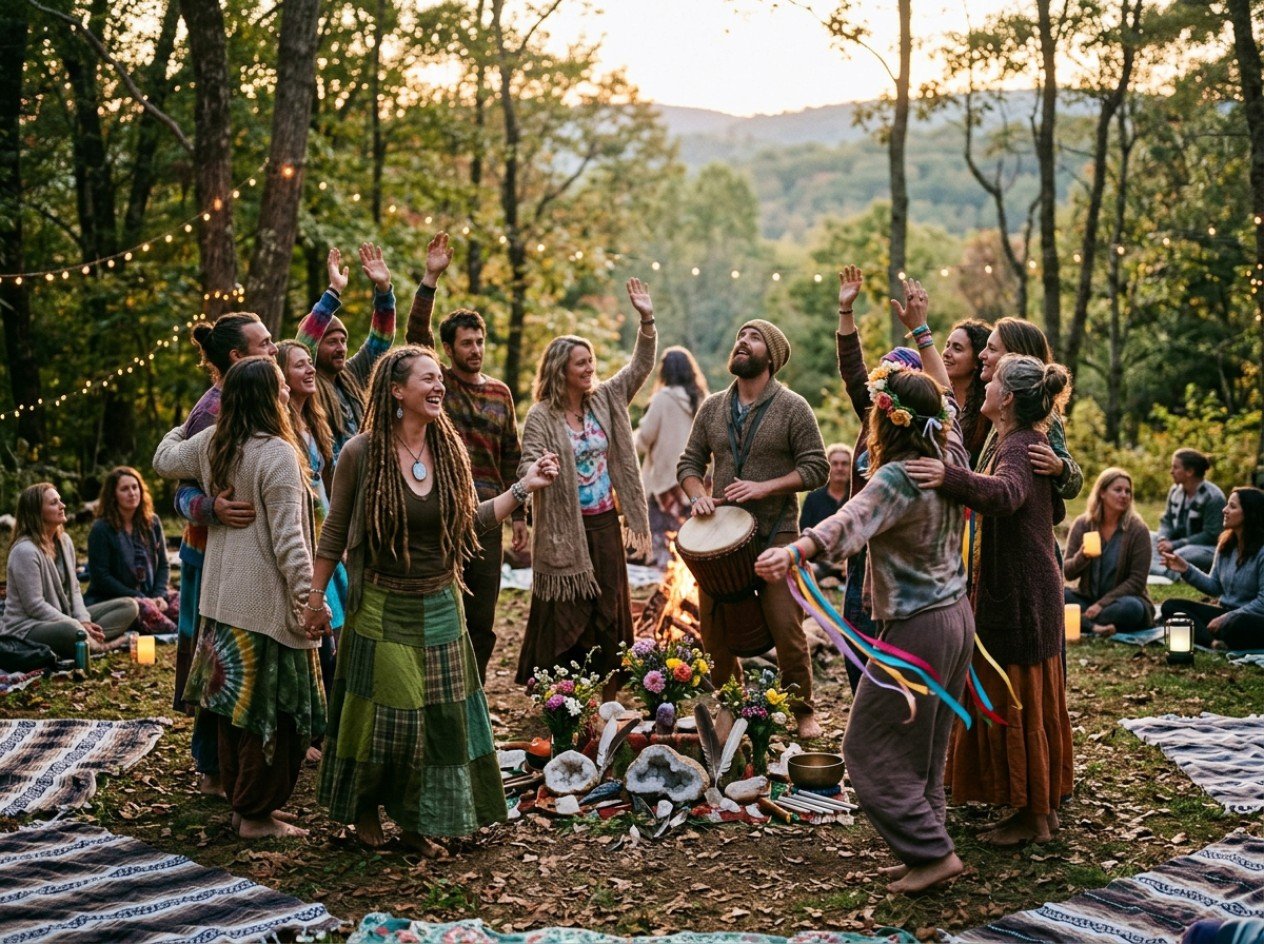
The Summer Solstice, occurring around June 20th or 21st, marks the longest day of the year. Across many ancient cultures, this was a time of celebration, gratitude, and abundance. New Age traditions often view the Summer Solstice as a period of maximum vitality, creativity, and spiritual energy. Outdoor gatherings, sunrise meditations, fire ceremonies, music, dancing, and expressions of gratitude frequently accompany this date. The symbolism is beautifully straightforward: light reaches its greatest strength, encouraging us to recognise our own inner light and share it generously with others.
The Autumn Equinox, arriving around September 22nd or 23rd, represents another moment of balance. As daylight gradually decreases, attention naturally turns inward. New Age spirituality often associates this season with gratitude, reflection, and harvest. Just as farmers gather crops, individuals are encouraged to recognise the personal growth, relationships, and achievements cultivated throughout the year. It is also viewed as an appropriate time to release habits, beliefs, or emotional burdens that no longer support one's wellbeing.
The Winter Solstice, usually falling on December 21st or 22nd, carries profound symbolic importance. Although it marks the longest night of the year, it also represents the gradual return of light. Many spiritual traditions have celebrated this turning point for millennia because it reminds us that hope often emerges during periods of greatest darkness. New Age celebrations frequently include candle lighting, meditation, quiet reflection, and ceremonies focused upon renewal. Rather than viewing winter as a season of endings alone, it becomes a period of rest, preparation, and quiet transformation.
In addition to these solar events, many New Age practitioners celebrate the eight seasonal festivals collectively known as the Wheel of the Year. Borrowed largely from modern Pagan and Wiccan traditions, these include Samhain, Yule, Imbolc, Ostara, Beltane, Litha, Lughnasadh, and Mabon. While not every New Age practitioner observes these festivals, they have become widely recognised because they beautifully illustrate humanity's longstanding relationship with seasonal cycles.
New Age, Samhain & Halloween
Samhain, celebrated around October 31st, is often regarded as a time for remembering ancestors and reflecting upon the cycles of life and death. Modern Halloween shares historical connections with this ancient Celtic festival, although contemporary New Age observances tend to emphasise remembrance, gratitude, and spiritual reflection rather than costumes or entertainment.
Imbolc, observed around February 1st or 2nd, celebrates the first signs of returning spring. Traditionally associated with the Celtic goddess Brigid, it symbolises inspiration, creativity, healing, and hope. Many people use this period to begin new creative projects or renew personal commitments established earlier in the year.
Beltane, celebrated around May 1st, represents fertility, joy, love, and abundance. Traditionally marked with flowers, dancing, and outdoor celebrations, Beltane honours both the vitality of nature and the importance of healthy relationships, creativity, and personal expression. Even those who do not follow Pagan traditions often appreciate Beltane as a celebration of life's energy and beauty.
Another important feature of many New Age calendars involves the lunar cycle. Each New Moon symbolises beginnings, intention-setting, and possibility. People frequently use this time for meditation, journaling, creating goals, or beginning new projects. The Full Moon, by contrast, represents culmination, illumination, gratitude, and release. Full Moon gatherings have become increasingly popular, with participants engaging in meditation, sound healing, yoga, or simply spending time outdoors beneath the moonlight reflecting upon recent experiences.
Eclipses also occupy a significant place in contemporary New Age spirituality. Solar and lunar eclipses are often interpreted symbolically as periods of accelerated personal transformation. While astronomy explains the mechanics of eclipses with remarkable precision, many spiritual practitioners view them as opportunities to reconsider priorities, release outdated patterns, and embrace unexpected changes. Whether interpreted literally or metaphorically, eclipses encourage reflection upon life's ongoing cycles of endings and beginnings.
New Age & Astrological Events
Astrological events likewise appear prominently throughout many New Age calendars. Mercury retrograde has become particularly well known, often associated—sometimes humorously—with communication challenges, travel delays, and technological frustrations. More thoughtfully, many astrologers encourage using Mercury retrograde periods for reviewing, reflecting, editing, and reconnecting rather than launching major new ventures. Other planetary movements, such as Jupiter entering a new zodiac sign or Saturn changing signs, are also interpreted symbolically as opportunities for collective and personal growth.
The Lion's Gate Portal, celebrated annually around August 8th, has become increasingly popular within contemporary New Age communities. Although its historical origins differ from ancient Egyptian traditions with which it is sometimes associated, many practitioners view this date as symbolising heightened spiritual awareness, manifestation, and personal transformation. Meditation, affirmations, and vision-setting often accompany its observance.
Many New Age practitioners also celebrate Earth Day on April 22nd as a deeply spiritual occasion. Caring for the planet is often viewed not merely as environmental responsibility but as an expression of reverence for the interconnectedness of all life. Tree planting, beach clean-ups, gardening, and environmental education become acts of spiritual practice as well as ecological stewardship.
One aspect of the New Age calendar that I particularly appreciate is its emphasis on participation rather than obligation. These dates are not generally viewed as requirements but as invitations. They encourage us to pause periodically throughout the year and ask meaningful questions. What have I learned? What am I grateful for? What no longer serves me? What qualities would I like to cultivate during the coming season? In that sense, the calendar becomes less about marking time and more about encouraging intentional living.
From a historical perspective, it's fascinating that many of these observances draw upon traditions stretching back thousands of years while simultaneously adapting to modern life. Ancient agricultural festivals now coexist with mindfulness retreats, online meditation groups, and urban spiritual communities. This blending of old and new reflects one of the defining characteristics of New Age spirituality: its willingness to learn from multiple traditions while encouraging individuals to develop practices that feel personally meaningful.
The significance of the New Age calendar lies not with any particular date itself but in what those dates encourage us to remember. The Earth moves through seasons of growth and rest. The Moon waxes and wanes. Day becomes night, and winter eventually becomes spring. Our own lives follow similar rhythms. There are times for action and times for reflection, moments for celebration and moments for healing, seasons for beginning and seasons for letting go. The New Age calendar simply reminds us that we are not separate from these natural cycles. We are participants within them, and by becoming more aware of their rhythms, we often discover a deeper sense of balance, gratitude, and connection with the remarkable world we share.