


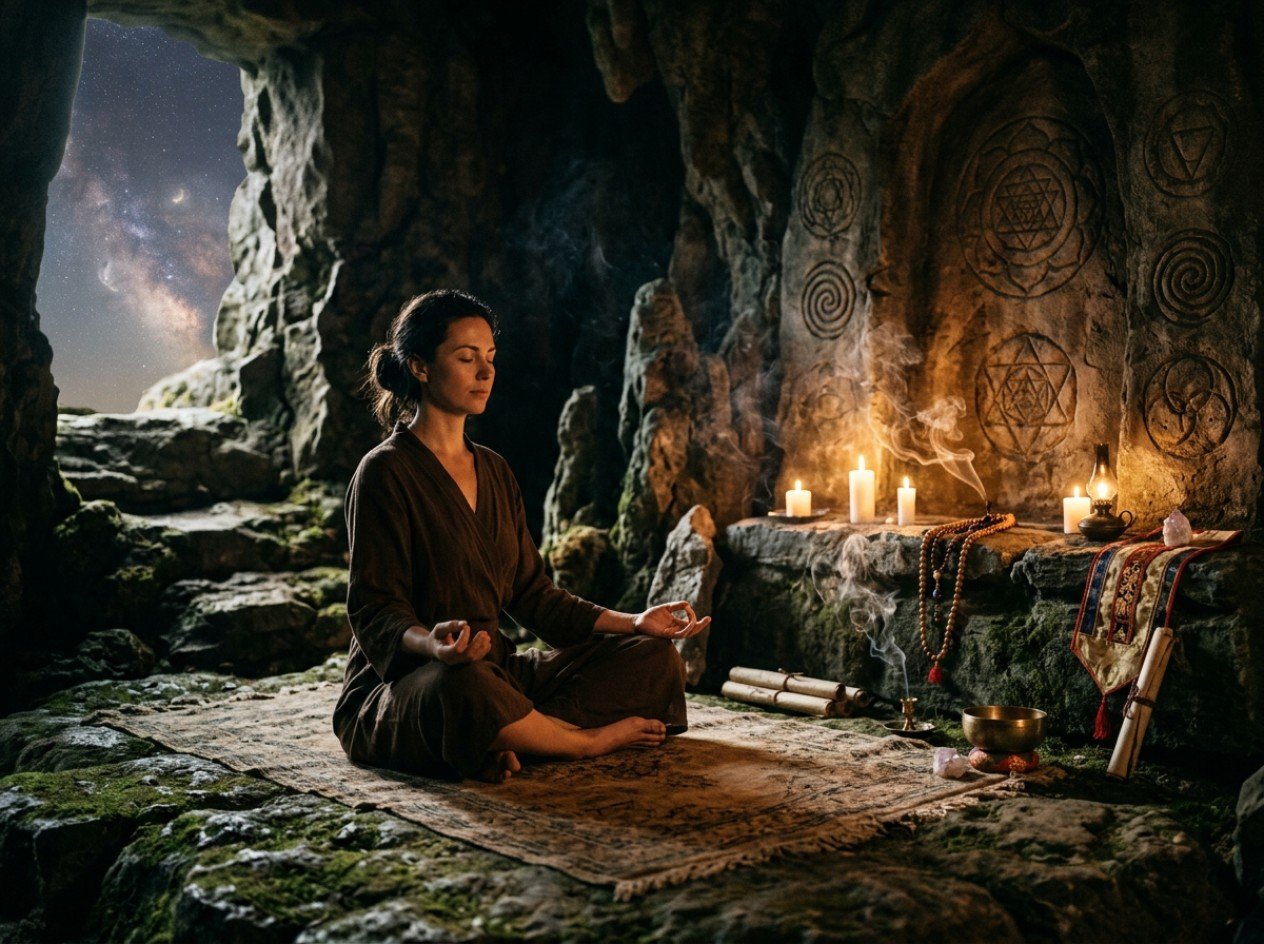
Meditation & Mysticism
Meditation and mysticism have shared a close relationship for thousands of years. Across cultures, religions, and spiritual traditions, people have turned to periods of quiet reflection as a way of understanding themselves, finding inner peace, and exploring life's deeper mysteries. While meditation is often associated with relaxation and stress reduction today, its roots reach much further. For countless generations, it has been regarded as a doorway to greater awareness, compassion, and spiritual insight. What I find most inspiring is that meditation does not ask us to become someone different. Instead, it gently encourages us to become more fully ourselves by learning to observe our thoughts, emotions, and experiences with patience and kindness.
When people first hear the word "mysticism," they sometimes imagine extraordinary visions or supernatural experiences. While those stories certainly exist within many traditions, I have come to believe that mysticism is often much quieter than that. At its heart, mysticism is about seeking a deeper relationship with life, the Divine, or whatever each individual understands as the sacred. It is less about escaping the world than learning to experience it more fully. Meditation provides one of the most accessible ways of beginning that journey because it invites us to slow down and simply pay attention.
Meditation As A Spiritual Tradition
One of the beautiful things about meditation is that it appears in almost every major spiritual tradition. Buddhist monks have practiced mindful awareness for centuries, Christian contemplatives developed silent prayer, Hindu yogis explored profound states of concentration, Jewish mystics incorporated meditation into Kabbalistic study, and Sufi practitioners used rhythmic prayer and remembrance to cultivate closeness with God. Although their methods differ, they all share a common belief that periods of intentional stillness can deepen spiritual understanding and transform the human heart.
In our modern lives, we rarely experience genuine silence. Our attention is constantly drawn toward emails, news, social media, conversations, and endless responsibilities. Meditation gently invites us to step away from that continual activity, even if only for a few minutes each day. Rather than adding another task to our schedule, it offers permission to pause. I have always found it remarkable that some of our greatest insights often arrive not while we are searching for answers but when we finally become still enough to listen.
Many people assume that successful meditation means completely emptying the mind of thoughts. In my experience, that expectation often creates unnecessary frustration. The mind naturally produces thoughts, memories, plans, and emotions. Meditation is not about stopping them altogether. Instead, it teaches us to notice them without becoming completely absorbed by them. Imagine sitting beside a river, watching leaves float downstream. Each leaf represents a thought. Rather than chasing after every leaf, meditation encourages us simply to observe them passing by with gentle curiosity.
Meditation & Mystics Throughout History
This practice of observation has profound connections with mysticism. Mystics throughout history have often described moments when ordinary thinking softened, allowing them to experience a greater sense of unity, compassion, gratitude, or peace. These experiences are not necessarily dramatic or extraordinary. More often, they arise quietly through consistent practice. Meditation helps create the conditions in which these moments may naturally emerge, although it wisely teaches us not to become attached to particular outcomes.
Breath plays a central role in many forms of meditation because it provides an anchor for the wandering mind. Our breathing accompanies us throughout every moment of our lives, yet we rarely notice it. By returning our attention to the gentle rhythm of inhaling and exhaling, we gradually become more present. This simple practice reminds us that peace is often found not by escaping the present moment but by entering it more fully.
Meditation & The Cultivation of Self-Compassion
One aspect of meditation that I particularly appreciate is its ability to cultivate self-compassion. Many of us spend far too much time criticising ourselves, replaying mistakes, or worrying about the future. Meditation encourages a different relationship with ourselves—one based upon patience rather than judgement. Instead of viewing difficult emotions as enemies, we learn to acknowledge them with kindness and curiosity. This gentle acceptance often becomes the first step toward meaningful personal growth.
Mysticism has always emphasised that spiritual development is reflected in how we treat other people. Meditation supports this beautifully. As we become more aware of our own thoughts and emotions, we often develop greater empathy for the experiences of others. Compassion naturally expands because we recognise that everyone faces struggles, uncertainties, and moments of joy. Loving-kindness meditation, for example, encourages us to silently wish happiness, health, and peace not only for ourselves but also for friends, strangers, and even those with whom we disagree.
Another wonderful aspect of meditation is that it requires very little. There is no perfect room, special clothing, or elaborate equipment needed to begin. A quiet chair, a comfortable cushion, or a peaceful walk through nature can all become opportunities for meditation. Some people enjoy practicing for twenty or thirty minutes each day, while others begin with just five minutes. What matters far more than duration is consistency. Small moments of daily stillness often have a greater long-term impact than occasional lengthy sessions.
Meditation also complements many other mystical practices. Some people meditate before drawing Tarot cards, allowing their minds to settle before reflecting upon symbolic imagery. Others meditate while contemplating the phases of the Moon, studying astrology, keeping dream journals, or reading sacred texts. Rather than replacing these practices, meditation deepens them by encouraging greater presence and attentiveness. It becomes the quiet foundation upon which many other spiritual explorations can rest.
Meditation & Nature
Nature itself can become a powerful setting for meditation. Sitting beside the ocean, listening to birdsong, walking through a forest, or simply watching clouds drift across the sky reminds us that the natural world moves according to rhythms much older than ourselves. Many mystical traditions encourage spending time outdoors because nature gently reflects qualities such as patience, balance, renewal, and interconnectedness. Watching the changing seasons can become a meditation in itself, reminding us that growth often unfolds gradually and naturally.
Of course, meditation is not about escaping life's difficulties. Challenges, disappointments, and uncertainty remain part of the human experience. What meditation offers is a different way of responding to them. Instead of reacting automatically, we gradually develop the ability to pause, observe, and choose our response more thoughtfully. This inner steadiness becomes one of meditation's greatest gifts, allowing us to navigate both joyful and difficult moments with greater clarity.
One lesson that has stayed with me throughout my own exploration of meditation is that there is no perfect meditation session. Some days the mind feels calm and focused, while on others it seems wonderfully chaotic. Both experiences are perfectly normal. The value of meditation lies not in achieving flawless concentration but in returning, again and again, to the simple practice of awareness. Each time we notice our attention wandering and gently bring it back, we strengthen our capacity for mindfulness and self-understanding.
Ultimately, meditation and mysticism invite us to rediscover something we often overlook in the busyness of modern life: the quiet wisdom that already exists within us. They remind us that meaningful spiritual growth rarely arrives through dramatic revelations alone. Instead, it emerges gradually through patience, compassion, curiosity, and the willingness to sit quietly with ourselves. Whether you approach meditation from a religious tradition, a mystical path, or simply as a way of cultivating greater peace, it offers an invitation that is both timeless and beautifully simple. Pause. Breathe. Listen. In that stillness, you may begin to discover that some of life's deepest truths have been waiting patiently within you all along!