

The Kabbalah's Stages of Life
One of the greatest gifts of studying Kabbalah is that it teaches us to see life as a journey rather than a destination. Before I entered rabbinical training, I imagined spirituality as something one either possessed or didn't possess. Over the years, however, I came to understand something much more beautiful. Judaism, and particularly the mystical tradition of Kabbalah, sees human life as an unfolding process. We are not expected to have all the answers at twenty, forty, or even eighty. Instead, every stage of life offers its own spiritual lessons, its own opportunities for growth, and its own unique relationship with the Divine. Living in Greenwich Village has only reinforced this belief for me. Walking through Washington Square Park, I can see children playing, students beginning new adventures, parents raising families, artists pursuing their passions, and older couples strolling hand in hand. Each life reflects a different chapter, and Kabbalah suggests that every chapter possesses sacred significance.
Kabbalah, whose name derives from the Hebrew word Kabbalah (קַבָּלָה), meaning "receiving" or "that which has been received," seeks to uncover the deeper spiritual dimensions of existence. Rather than focusing solely upon laws or rituals, Kabbalah explores how God's infinite presence becomes expressed throughout creation and within each human soul. Central to this exploration is the belief that every individual possesses a unique spiritual purpose. Our lives are not random sequences of events but opportunities for the soul to learn, mature, repair, and draw closer to the Divine.
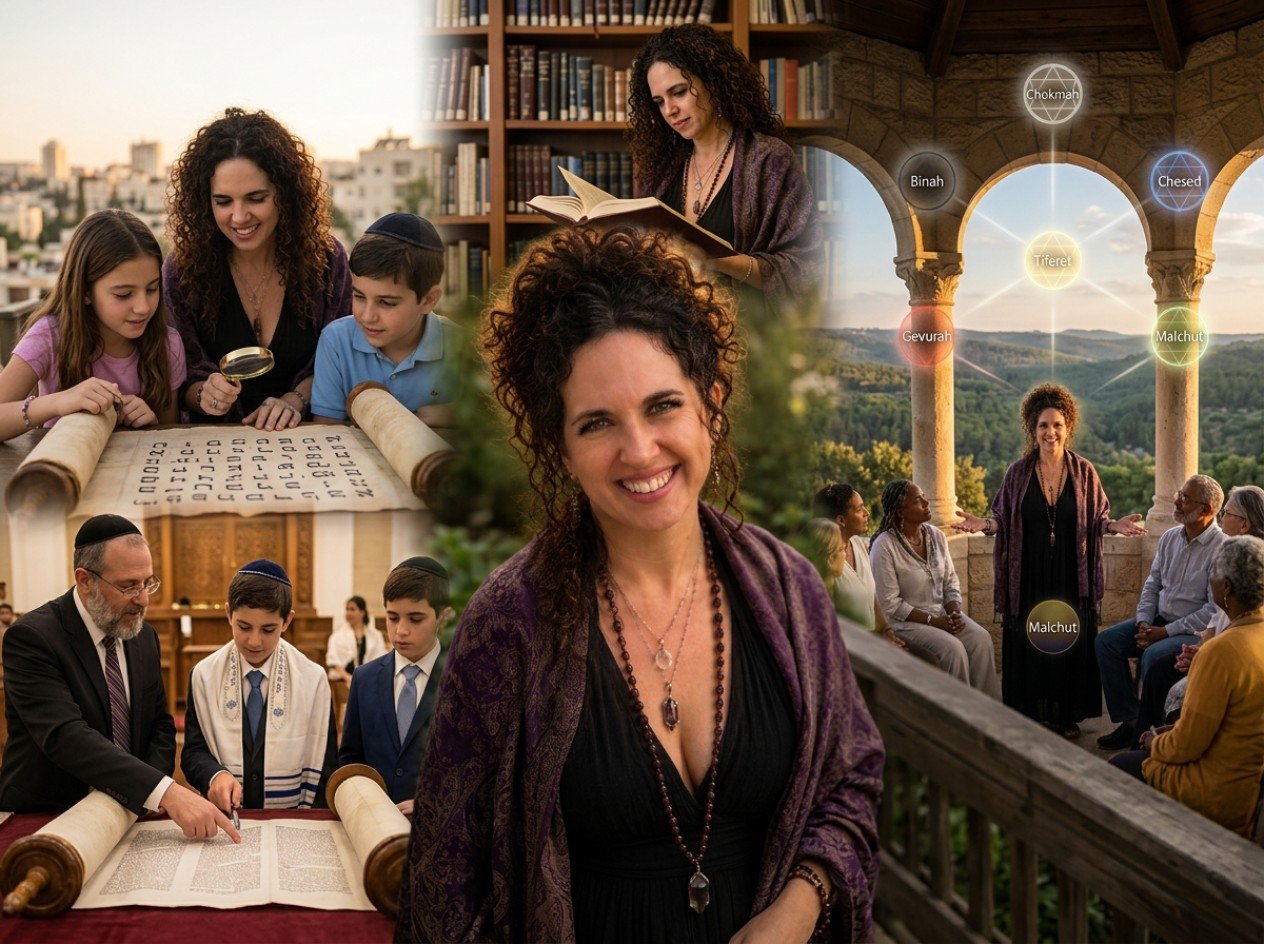
One of the most useful ways of understanding life's progression through a Kabbalistic lens is by considering the Tree of Life, or Etz Chaim (עֵץ חַיִּים). The ten Sefirot, the divine attributes represented upon the Tree, do not simply describe God; they also provide a symbolic map of human development. Different qualities naturally become more prominent at different stages of life. Although we continue cultivating all of them throughout our lives, certain spiritual lessons often emerge with greater clarity during particular seasons.
The Kabbalah & Childhood
Childhood, for example, beautifully reflects the qualities associated with Chesed (חֶסֶד), meaning loving-kindness, generosity, and openness. Children approach the world with remarkable curiosity. They ask endless questions, trust easily, forgive quickly, and experience wonder with astonishing frequency. Kabbalah reminds us that these qualities are not signs of immaturity but reflections of something profoundly spiritual. Long before children understand complex theology, they naturally possess qualities that many adults spend decades trying to rediscover. Their openness teaches us something about our original relationship with creation.
As children gradually mature into adolescence, another Sefirah begins asserting itself more strongly: Gevurah (גְּבוּרָה), often translated as strength, discipline, or judgement. Adolescence frequently involves testing boundaries, developing personal identity, and learning responsibility. Young people begin discovering that freedom cannot exist without accountability. From a Kabbalistic perspective, this stage is not merely psychological; it is spiritual. Developing self-discipline, ethical awareness, and personal responsibility prepares the soul for greater maturity. Gevurah teaches that genuine love sometimes requires healthy boundaries, patience, and restraint.
The Kabbalah & Early Adulthood
Early adulthood often becomes a period characterised by Tiferet (תִּפְאֶרֶת), meaning beauty, harmony, and balance. This is the stage where many individuals begin integrating the generosity of Chesed with the discipline of Gevurah. Careers develop, relationships deepen, families begin, and life's competing responsibilities require balance rather than extremes. Tiferet reminds us that spiritual maturity rarely consists of choosing one quality over another. Instead, wisdom emerges through integration. Compassion must coexist with justice, ambition with humility, independence with community.
One of the lessons I often share with younger adults is that Kabbalah never expects perfection. The Tree of Life itself suggests movement rather than completion. Every challenge, disappointment, success, and unexpected detour contributes something valuable to the soul's ongoing development. Judaism has always understood that human beings learn not only through triumph but through struggle. Our imperfections become opportunities for growth rather than evidence of failure.
The Kabbalah & Middle Adulthood
Middle adulthood frequently brings us into deeper relationship with Netzach (נֵצַח) and Hod (הוֹד), two Sefirot that beautifully complement one another. Netzach represents endurance, perseverance, and determination. Hod symbolises humility, gratitude, and acknowledgement. Together they describe much of what middle life requires. We continue pursuing meaningful goals while simultaneously recognising that life rarely unfolds exactly as planned. We become more patient with ourselves. Success gradually becomes measured less by achievement alone and more by wisdom, generosity, and the quality of our relationships.
I sometimes smile when younger people imagine that middle age represents spiritual decline. My own experience has been quite the opposite. The years have softened certain certainties while strengthening deeper convictions. Kabbalah teaches that humility is not thinking less of ourselves but recognising our place within something infinitely greater. Hod encourages precisely that perspective. We become increasingly grateful for ordinary blessings that once seemed unremarkable.
Relationships also evolve significantly through the Kabbalistic understanding of life stages. In youth, romantic love often focuses upon attraction, excitement, and possibility. As relationships mature, they gradually reflect deeper aspects of the Tree of Life. Yesod (יְסוֹד), meaning foundation, becomes increasingly important. Yesod symbolises connection, trust, communication, and intimacy. Lasting relationships are built less upon emotional intensity than upon dependable foundations created through years of shared experiences, forgiveness, honesty, and mutual support.
The Kabbalah, Parenthood & Later Adulthood
Parenthood introduces another profound spiritual dimension. Although not everyone becomes a parent, those who do frequently describe it as transforming their understanding of both love and responsibility. Kabbalah invites parents to see themselves not merely as caregivers but as partners with God in nurturing future generations. Every act of teaching, encouraging, comforting, or guiding becomes part of the sacred work of Tikkun Olam (תִּיקּוּן עוֹלָם), repairing and improving the world one life at a time.
Later adulthood often draws our attention toward Binah (בִּינָה), understanding, and Chokhmah (חָכְמָה), wisdom. Younger years frequently emphasise acquiring information and experience. Later years invite reflection upon their meaning. Many older adults discover that questions once answered confidently now appear more mysterious, while mysteries once feared become sources of comfort rather than uncertainty. Kabbalah encourages this shift because genuine wisdom often grows quieter rather than louder.
One aspect of Jewish mysticism that has always moved me deeply is its understanding of ageing. Modern society sometimes measures people according to productivity or external achievement. Kabbalah proposes something radically different. Every year of life represents another opportunity for the soul to become more refined. Wrinkles become symbols not merely of passing time but of accumulated compassion, resilience, forgiveness, and insight. Growing older is not viewed primarily as decline but as continued spiritual ripening.
Even experiences of suffering occupy a meaningful place within Kabbalistic thought, although they should never be romanticised or sought. Illness, grief, disappointment, and loss remain profoundly painful. Kabbalah does not minimise that reality. Instead, it gently suggests that difficult experiences sometimes awaken qualities that comfort alone cannot fully cultivate: patience, empathy, humility, courage, and compassion. We would never choose suffering, yet many people discover unexpected depths of character while moving through it.
The Kabbalah & Teshuvah (Return)
One Hebrew concept that becomes increasingly meaningful throughout life is Teshuvah (תְּשׁוּבָה), usually translated as repentance but perhaps better understood as "return." Teshuvah reminds us that spiritual growth remains possible at every age. We are never too young to begin changing, nor too old to continue learning. Every day offers another opportunity to return—to our values, to healthier relationships, to compassion, and ultimately to God. That possibility remains one of Judaism's most hopeful teachings.
Kabbalah also places enormous importance upon community throughout every stage of life. Spiritual development is not understood as an isolated pursuit. We learn through teachers, friends, family members, neighbours, and even strangers. Living in New York constantly reminds me of this truth. Every subway ride, every conversation in a café, every walk through the Village becomes an opportunity to encounter the Divine reflected in another person's humanity. The mystical tradition consistently teaches that God is encountered not only in solitude but also through our relationships with one another.
As life gradually approaches its later chapters, many people become increasingly aware of Keter (כֶּתֶר), the Crown, representing divine presence beyond complete human understanding. Earlier stages often involve striving, building, questioning, and achieving. Later life sometimes invites a quieter posture of trust. Rather than seeking to control every outcome, we become more comfortable living alongside mystery. Keter reminds us that the deepest truths ultimately exceed language itself.
Looking back, I think one of the most beautiful aspects of Kabbalah is that it refuses to divide life into successful and unsuccessful chapters. Every season possesses spiritual value. Childhood teaches wonder. Youth teaches responsibility. Adulthood teaches balance. Middle age teaches endurance and humility. Later life teaches wisdom and trust. Each stage prepares us for the next while continually drawing the soul closer toward its divine source.
The Kabbalah invites us to see our lives not as disconnected episodes but as a sacred journey unfolding one day at a time. Every conversation, every challenge, every celebration, every act of kindness contributes to the gradual shaping of the soul. We are all, regardless of our age, still becoming. The Tree of Life reminds us that spiritual growth never truly ends. As long as we remain open to learning, compassionate toward others, and willing to return continually to what is good, beautiful, and true, every stage of life remains filled with possibility. That, I believe, is one of Kabbalah's greatest gifts: the reassuring promise that every season of our lives, from childhood to old age, belongs within the embrace of the Divine.