


The Kabbalah & The Repair Of The World
Every morning when I walk from my apartment to the synagogue, down through the Village, past the coffee shops just opening and the last of the night people still heading home, I think about the Garden of Eden. Not as a place. As a condition. As a state of being that we lost and that the whole of Jewish mystical tradition says we are working our way back toward, one lifetime, one moment of genuine awareness, one small act of repair at a time.
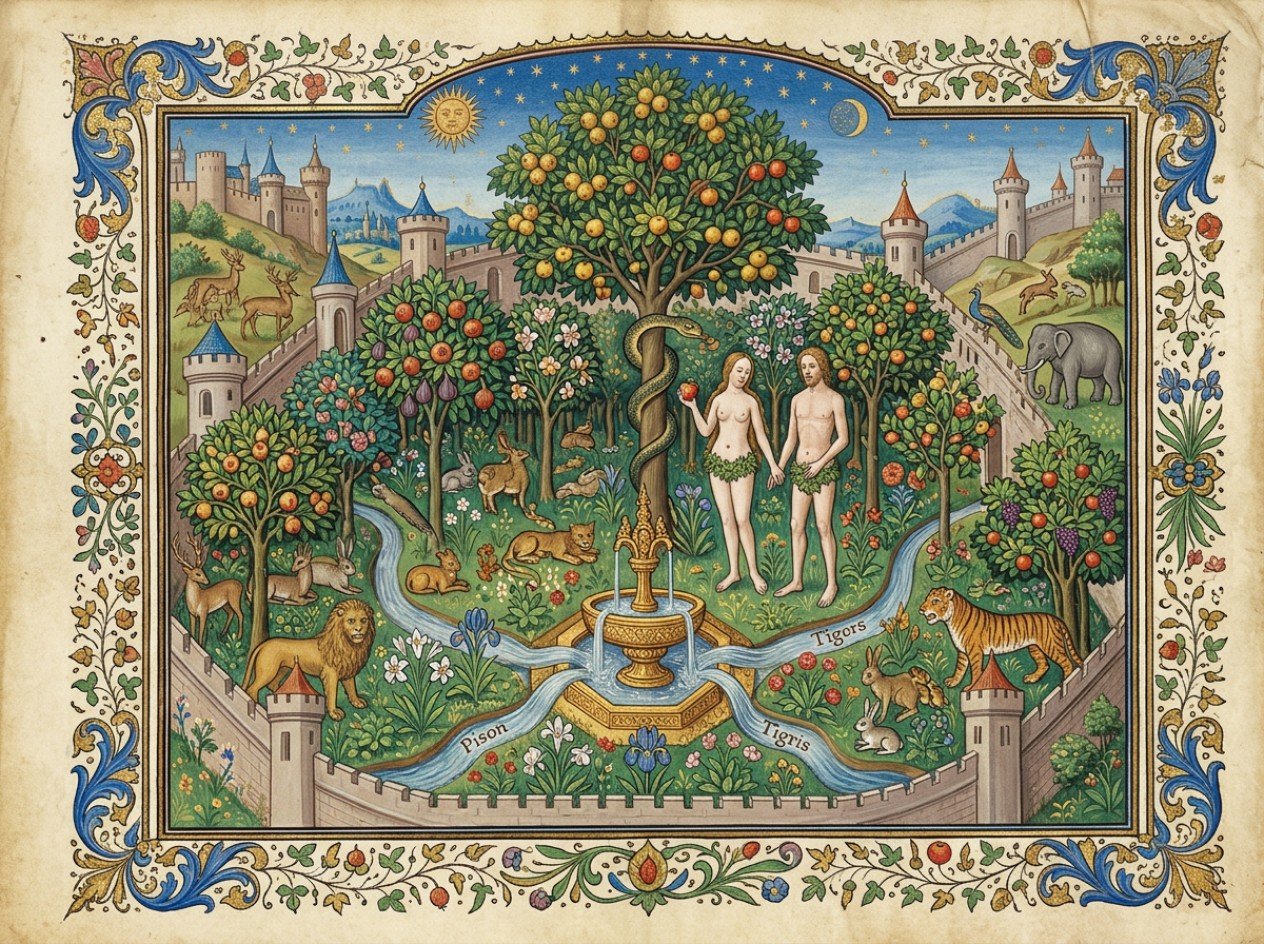
This is the project that Kabbalah calls tikkun olam, the repair of the world, and I want to spend some time with it today not as theology but as practical guidance for living, because I think it is one of the most psychologically sophisticated frameworks for personal development that any tradition has produced. And I say that as someone who has read quite a lot of the alternatives. Let me start with the Garden itself, because the Kabbalistic reading of Gan Eden is not the Sunday school version. In the plain text of Genesis, Adam and Eve are in a state of original wholeness, naked and not ashamed, in direct relationship with the divine, in a world where the names of things and the things themselves are in perfect alignment. Then comes the eating of the fruit of the Tree of Knowledge of Good and Evil, the shattering of that wholeness, the expulsion. We lose the Garden. We put on clothes. We become self-conscious. The world becomes opaque where it was transparent.
Kabbalah & Isaac Luria
The Kabbalistic tradition, particularly as it developed through figures like Isaac Luria in sixteenth-century Safed, reads this story as cosmic rather than merely personal. Luria's teaching of the shevirat ha-kelim, the shattering of the vessels, describes a primordial catastrophe at the moment of creation itself. When the divine light poured into the vessels prepared to hold it, the vessels shattered. The divine sparks, the nitzotzot, scattered into the material world, becoming trapped in the fragments of the broken vessels, in the realm of the klippot, the shells or husks that represent concealment and opacity. The world we live in is a world of scattered divine sparks. The work of human life is to gather them.
This is tikkun, repair, restoration, healing. And here is where it becomes personal in ways I find genuinely useful for the people I work with, whether they are coming to me as congregants or as seekers from outside the tradition entirely. The Kabbalistic map of the human soul places us between two poles. Below us is the realm of the klippot, the shells, the ego in its most defended and most contracted form, the self that operates purely from fear, craving, and the compulsive need to separate itself from everything else. Above us, or within us, depending on how you read the geometry, is the Or Ein Sof, the infinite light, the boundless divine from which the sparks originally came. Between these poles, the Tree of Life unfolds: the ten sefirot, the divine attributes or qualities through which the Ein Sof expresses itself and through which we can consciously align ourselves with the divine flow.
The sefirot that are most relevant to personal development work, in my experience, are the three that form the middle pillar of the Tree: Keter (the crown, pure divine will and the deepest self beyond ego), Tiferet (beauty, balance, the integrated heart), and Yesod (foundation, the capacity to connect and channel). What the Kabbalistic tradition suggests is that our work as human beings is to move our centre of gravity upward on this pillar, away from the ego's compulsive reactivity at the bottom and toward the integrated, heart-centred awareness of Tiferet, and from there toward the pure witness consciousness of Keter. This is, in psychological language, the movement from defensive self-contraction toward increasing openness, integration, and genuine encounter with what is actually present. The Garden, in this reading, is not a place behind us but a state of consciousness ahead of us, or more precisely, within us, available in moments of genuine presence, genuine love, genuine creative engagement, and most of all in moments of genuine surrender to what is larger than the ego's agenda.
Cheshbon Ha-Nefesh, Hitbonenut, & Devekut
The practical question, the one I get in every class and every conversation, is: how? How do you actually do this work? And this is where I think the Kabbalistic tradition is most usefully concrete, because it doesn't leave the answer at the level of aspiration. It gives you practices. The first is cheshbon ha-nefesh, the accounting of the soul. This is a practice of honest, non-punitive self-examination: looking clearly at the patterns in your own life and asking where you are operating from the klippot, from the ego's defended and contracted position, and where you are managing to act from something more open. The tradition has always understood that you cannot heal what you cannot see. The accounting is not about self-flagellation, the Kabbalistic understanding of teshuvah, often translated as repentance, is better understood as returning: turning back toward your truest nature, which is always already oriented toward the divine. The second practice is hitbonenut, deep contemplation. In the Chabad tradition particularly, hitbonenut is a disciplined practice of meditating on a spiritual idea until it becomes not just intellectually understood but genuinely felt, embodied, known in the body rather than just the mind. The Kabbalistic tradition has always insisted that transformation that stays in the head has not gone deep enough. The light has to travel all the way down. The third, and the one I find most powerful in practice, is the cultivation of what the tradition calls devekut, cleaving to the divine, adhesion, the ongoing maintenance of a quality of awareness that keeps the divine in the room. Not mystical fireworks. Not peak experiences. Just the steady, practised, mostly quiet maintenance of the sense that you are in the presence of something larger than yourself, and that this presence is fundamentally good. This is what the Garden was: not a paradise of ease but a state of constant, unmediated relationship. The work of tikkun is to make that relationship available again, right here, in this body, in this city, in this specific and unrepeatable life.
On my walk to the synagogue this morning, a man on Bleecker Street was singing to himself, something I couldn't quite make out, quiet and apparently for no audience, just singing in the cold morning air. I thought: that. That's a spark. That's a nitzotz. The Garden is not lost. It is scattered and it is waiting. Our job is to recognise it when we see it, and to know that the recognition itself is an act of repair.