


Daily Rituals & Mysticism
If there's one thing I've learned over the years, it's that our lives are shaped less by the occasional grand event and much more by the small things we do every single day. Living here in San Diego, where the ocean has a way of reminding you to slow down and pay attention, I've come to appreciate the quiet power of daily rituals. They're not about superstition or rigid routines. They're about creating moments of intention in lives that often feel wonderfully busy, but also a little overwhelming. When we combine those daily rituals with the ideas found in mystical traditions, they become something even more meaningful—they become opportunities for personal growth, reflection, and connection.
Mysticism has always been less concerned with dramatic spiritual experiences than many people imagine. Instead, it encourages us to discover the sacred within ordinary life. Whether we're making our morning coffee, taking a walk along the beach, lighting a candle before meditation, or sitting quietly for a few moments before the day begins, these simple acts can become rituals that gently remind us to live with greater awareness. Mysticism teaches that spirituality isn't something reserved for special occasions; it can be woven into the rhythm of everyday life.
One of the misconceptions people often have about rituals is that they must be complicated or belong exclusively to organised religion. In reality, every one of us already has rituals. Some people begin each morning by checking their phones, while others exercise, read, journal, or enjoy breakfast with their family. A ritual is simply an action performed with consistency and intention. The difference between an ordinary habit and a meaningful ritual often lies in the awareness we bring to it.
Mystical traditions around the world have long recognised this connection between repetition and transformation. Buddhist monks practice daily meditation, Christian contemplatives observe regular periods of prayer, Jewish traditions include daily blessings, Muslims pray five times each day, and many Indigenous cultures begin or end the day with ceremonies of gratitude. Although these practices differ greatly, they share a common understanding that repeated acts of mindfulness gradually shape the heart and mind.
I think this is one of the reasons daily rituals remain so relevant today. Modern life often encourages us to move from one task to another without pausing to notice how we're actually feeling. Emails arrive before breakfast, meetings fill the day, and our phones constantly compete for our attention. Without realising it, we begin living reactively rather than intentionally. A daily ritual gently interrupts that pattern. It creates a small island of calm in the middle of a busy schedule.
Morning Rituals
Morning rituals are especially powerful because they establish the emotional tone for the hours ahead. Rather than immediately immersing yourself in news headlines or social media, imagine beginning your day with five minutes of quiet breathing, reading something inspiring, expressing gratitude, or simply watching the sunrise. Mysticism teaches that the beginning of the day carries symbolic importance. It represents possibility, renewal, and the opportunity to approach life with fresh awareness.
Gratitude is one ritual I recommend to almost everyone. It sounds wonderfully simple because it is. Taking just a few moments each day to acknowledge what is already good in your life gradually changes the way you perceive the world. Instead of focusing exclusively on what is missing, your attention naturally begins noticing moments of beauty, kindness, friendship, learning, and joy. Mystical traditions often describe gratitude as opening the heart because it shifts us from scarcity toward appreciation.
Meditation naturally complements many daily rituals. Contrary to popular belief, meditation isn't about forcing your mind to become completely silent. It's about learning to observe your thoughts without immediately reacting to them. Even ten quiet minutes each morning can create remarkable clarity. Over time, meditation develops patience, emotional balance, and self-awareness—qualities that every mystical tradition values highly. It's less about escaping reality than learning to experience reality more fully.
Using Nature in Daily Rituals
Nature also has an extraordinary ability to deepen everyday rituals. Living near the Pacific Ocean has taught me that simply watching the waves can become a form of meditation. Nature constantly reminds us that growth follows rhythms rather than deadlines. The tides rise and fall, seasons change, flowers bloom in their own time, and sunsets arrive without anyone needing to organise them. Mysticism often encourages us to reconnect with these natural cycles because they gently restore perspective and remind us that we are part of something much larger than ourselves.
One ritual that I particularly enjoy is journaling. At the end of each day, writing down thoughts, emotions, dreams, or moments of gratitude creates a valuable record of personal growth. Looking back through old journal entries often reveals patterns that would otherwise go unnoticed. We begin to recognise recurring challenges, celebrate progress, and appreciate how much we've learned along the way. Mysticism encourages self-reflection because transformation begins with honest awareness.
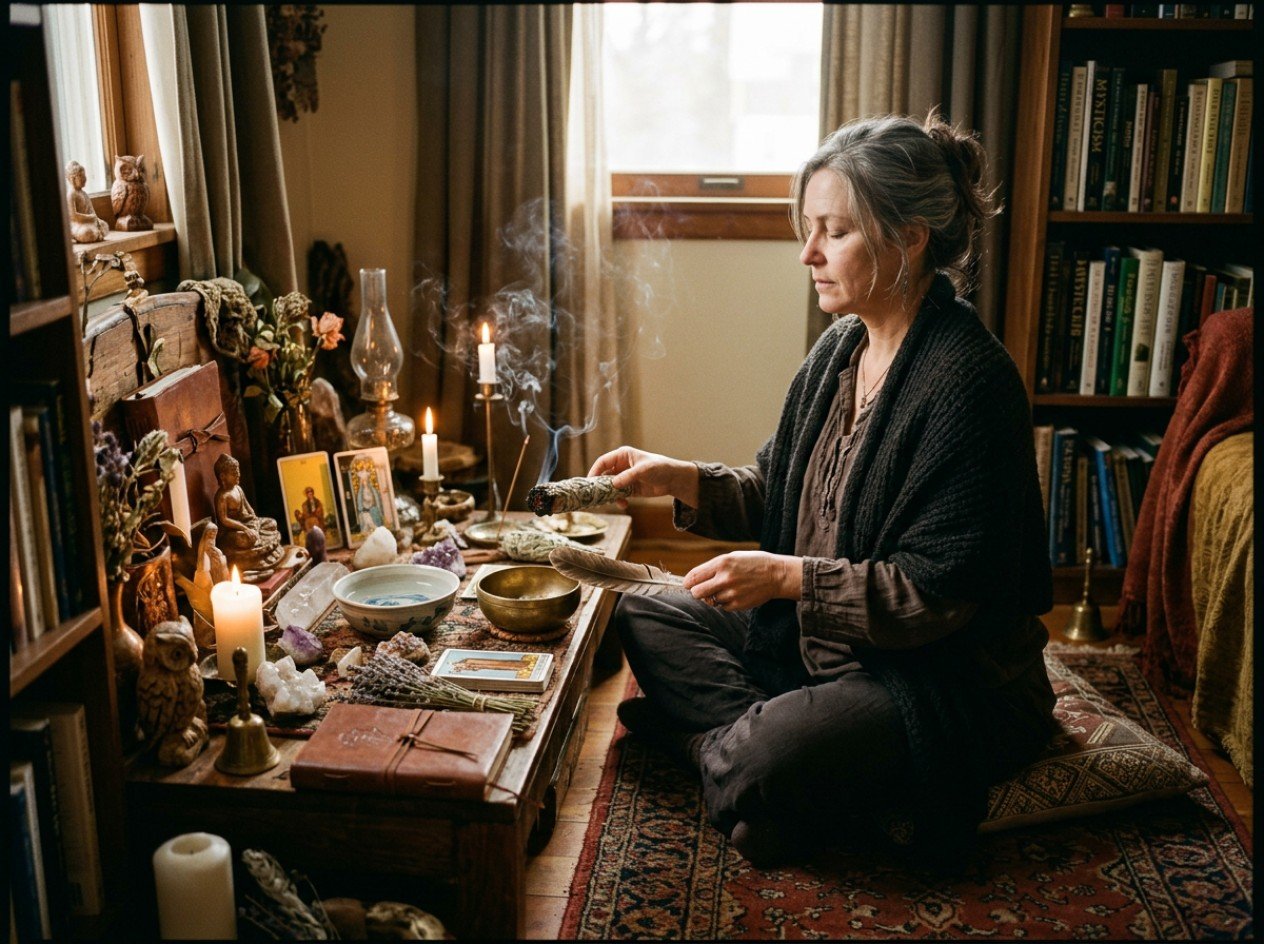
Symbols can also enrich daily rituals. A candle, a meaningful piece of jewellery, a favourite photograph, a Tarot card, or even a small stone collected during a memorable walk can serve as reminders of our intentions. The object itself possesses no magical power. Its value lies in the meaning we attach to it. Every time we see it, we're reminded of qualities we wish to cultivate—perhaps compassion, courage, patience, or hope.
Rituals & Kindness To Others
I also believe rituals become especially meaningful when they involve kindness toward others. Mysticism consistently teaches that genuine spiritual growth is reflected in how we treat people. Making time to check on a friend, writing a thoughtful message, volunteering, expressing appreciation, or performing anonymous acts of generosity can all become beautiful daily rituals. These practices gradually shift our attention away from ourselves and toward the wellbeing of those around us.
Even meals can become rituals rather than simply moments of consumption. Taking a brief pause before eating to express gratitude—for the food, the people who produced it, or the opportunity to gather with loved ones—changes the entire experience. We become more present. We eat more slowly. We notice flavours, conversations, and moments that might otherwise pass unnoticed. Mysticism reminds us that mindfulness transforms ordinary activities into meaningful experiences.
Evening rituals offer a different kind of gift. While morning rituals prepare us for the day ahead, evening rituals help us release the day that's ending. Turning off electronic devices, reading, stretching, praying, reflecting, or simply sitting quietly for a few minutes allows the mind to settle before sleep. Many people find that consistent evening rituals also improve dream recall, making it easier to explore dreams as part of their broader spiritual journey.
It's worth remembering that rituals should never become rigid obligations. Their purpose is to support wellbeing rather than create additional pressure. Life changes. Travel, illness, family responsibilities, and unexpected events occasionally interrupt even the best routines. Mysticism encourages flexibility and compassion toward ourselves. Missing a day isn't failure. Tomorrow simply offers another opportunity to begin again.
The Cmulative Effect of Daily Rituals
One aspect of daily rituals that I particularly appreciate is their cumulative effect. Individual moments may seem small, even insignificant. Five minutes of meditation hardly feels life-changing. Writing three things you're grateful for takes less than a minute. A short walk in nature seems wonderfully ordinary. Yet over months and years, these seemingly modest practices gradually reshape our outlook. We become calmer during difficulties, more appreciative of simple pleasures, more patient with ourselves, and more compassionate toward others. Like water slowly smoothing a stone, daily rituals transform us through consistency rather than intensity.
Mysticism has always taught that wisdom isn't discovered only through extraordinary experiences. More often, it emerges quietly through faithful attention to ordinary moments. Every sunrise becomes an invitation to begin again. Every conversation becomes an opportunity to practice kindness. Every challenge becomes a chance to respond with greater awareness. Daily rituals simply help us remember these opportunities instead of rushing past them.
Ultimately, I think that's the enduring beauty of combining daily rituals with mysticism. Neither asks us to withdraw from the world. Instead, they encourage us to participate in it more fully. They remind us that spirituality isn't something we pursue only during retreats, holidays, or special ceremonies. It lives in the choices we make every morning, every afternoon, and every evening. It appears in gratitude, compassion, reflection, generosity, and quiet moments of presence. When we approach our daily rituals with intention rather than routine, we begin discovering that the extraordinary isn't hidden somewhere far away. It has been quietly waiting within the ordinary all along.