


The Role of Dreams in Native American Religion
Living on the West Coast has given me countless opportunities to spend time in forests, deserts, mountains, and along the Pacific shoreline. Whenever I find myself watching the sun rise over the ocean or listening to the wind move through towering redwoods, I'm reminded that many Indigenous cultures have long understood something modern life sometimes forgets: nature speaks, if we are willing to listen. That same openness extends to dreams. Across many Native American traditions, dreams have often been regarded not simply as random images produced during sleep but as meaningful experiences capable of offering guidance, healing, wisdom, and connection with the spiritual world. While every Native Nation possesses its own unique beliefs and practices, dreams frequently occupy an important place within Indigenous spirituality, reminding us that our inner lives deserve as much attention as the visible world around us.
It is important to begin by recognising that there is no single "Native American belief" about dreams. Before European contact, North America was home to hundreds of distinct Indigenous nations, each with its own language, customs, ceremonies, and spiritual traditions. The Lakota, Navajo (Diné), Ojibwe, Cherokee, Haudenosaunee, Hopi, Pueblo peoples, Coast Salish, and many others all developed their own understandings of dreaming. While certain themes appear across multiple cultures, no single interpretation represents every Native American tradition. Respecting this diversity is essential when learning about Indigenous spirituality.
Dreams As A Bridge Between The Physical & Spiritual Worlds
One idea shared by many Native traditions is that dreams represent an important bridge between the physical and spiritual worlds. During sleep, the ordinary distractions of daily life become quieter, allowing messages, insights, or guidance to emerge more clearly. Rather than viewing dreams simply as private psychological events, many Indigenous cultures have traditionally understood them as meaningful experiences that may connect individuals with ancestors, spirit beings, animal guides, or the natural world itself.
This perspective differs in interesting ways from many modern Western approaches. Contemporary psychology often examines dreams through the lenses of neuroscience, memory processing, emotional regulation, or unconscious symbolism. These explanations have contributed enormously to our understanding of sleep and cognition. Indigenous traditions, however, frequently approach dreams less as neurological events and more as relationships. A dream is not merely something the brain produces; it may be something received, something inviting reflection, gratitude, or careful action.
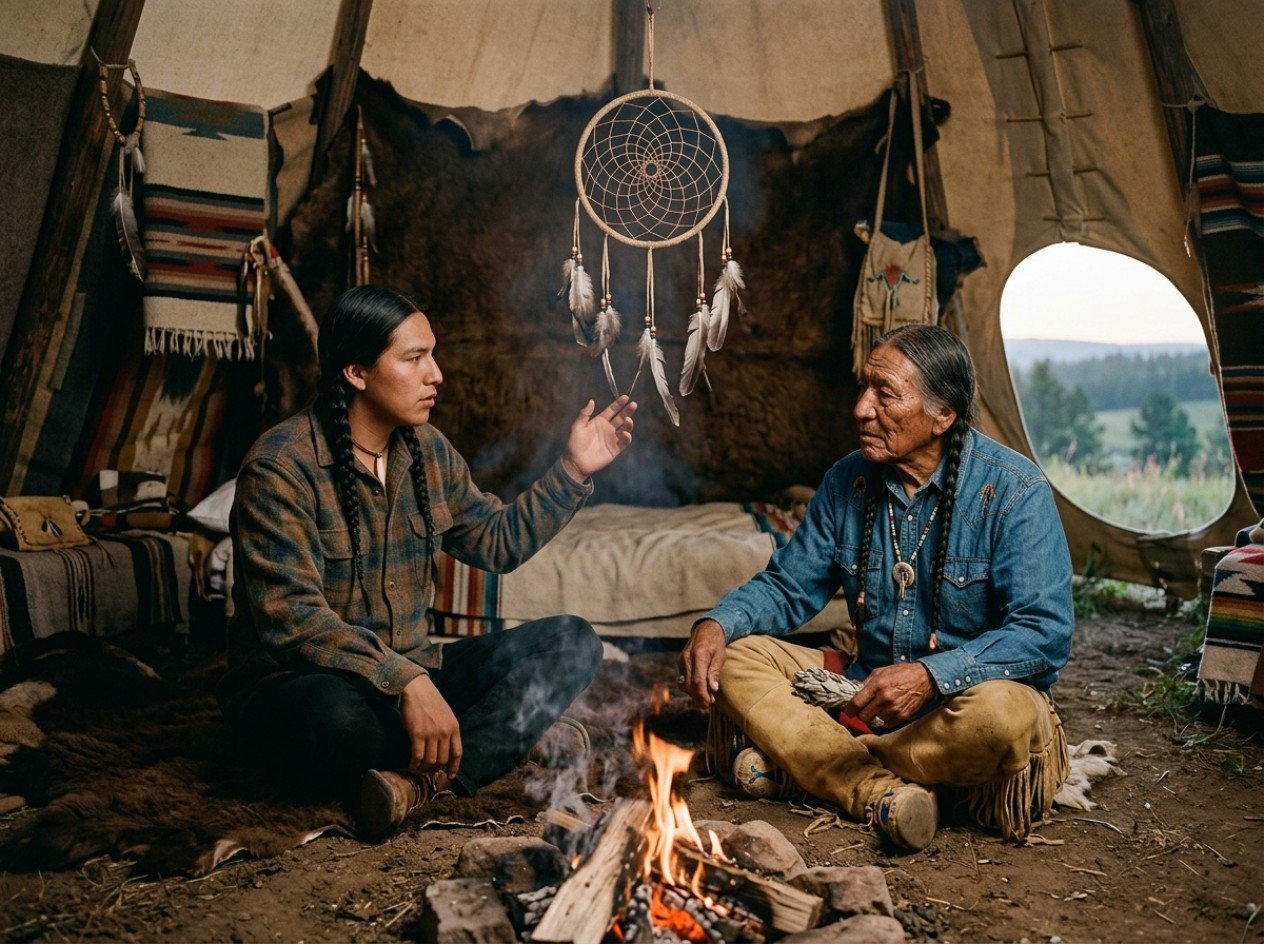
Among many Plains nations, dreams were sometimes regarded as important sources of personal guidance. Young people, particularly during important transitions into adulthood, might seek dreams through prayer, fasting, solitude, or ceremonial practices carried out under the guidance of respected elders. These experiences were not undertaken casually or simply out of curiosity. Rather, they formed part of a broader spiritual journey intended to help individuals discover their responsibilities, strengths, and place within the community.
The Vision Quest
The vision quest represents one of the best-known examples of this tradition, although it should always be understood within its proper cultural context. Practised in various forms by some Indigenous nations, but by no means all, the vision quest often involved periods of solitude, fasting, prayer, and reflection in natural settings. During these experiences, dreams and visions were sometimes understood as offering insight into one's purpose or spiritual path. Importantly, these ceremonies were conducted according to specific cultural traditions and were guided by experienced spiritual leaders. They should not be confused with modern commercial retreats that sometimes borrow Indigenous imagery without cultural understanding or permission.
Animals frequently appear in Native American dream traditions, often carrying symbolic significance. Again, these meanings vary considerably between nations, but animals are commonly viewed as teachers rather than merely decorative symbols. An eagle might represent vision, courage, or spiritual awareness. A bear may symbolize strength, healing, or introspection. Wolves are sometimes associated with loyalty, cooperation, and family, while deer may represent gentleness or sensitivity. These interpretations arise not simply from imagination but from generations of careful observation of the natural world and the qualities embodied by different species.
One aspect I particularly admire is that Indigenous dream traditions often encourage careful reflection rather than immediate certainty. A dream may not reveal its meaning all at once. Instead, individuals might discuss important dreams with respected elders, spiritual leaders, or family members who possess cultural knowledge. Interpretation becomes a communal process grounded in wisdom, experience, and tradition rather than relying solely upon individual opinion. There is a humility in this approach that I find refreshing. Not every mystery demands an immediate answer.
Dreams also played practical roles within some Indigenous communities. Historical accounts describe dreams influencing decisions about hunting, travel, healing, warfare, and community life. This did not necessarily mean that every dream was regarded as prophetic. Rather, particularly vivid or recurring dreams might be considered worthy of careful attention, especially when interpreted alongside experience, observation, and communal wisdom. Dreams became one source of guidance among many rather than replacing thoughtful judgement altogether.
Dreams & Healing
Healing occupies another important place within many Native traditions concerning dreams. Illness was often understood as involving physical, emotional, social, and spiritual dimensions simultaneously. Dreams sometimes formed part of healing ceremonies by revealing symbolic insights, identifying sources of imbalance, or encouraging reconciliation within families or communities. Healing therefore extended beyond treating symptoms to restoring harmony within the individual and their relationships with others, nature, and the spiritual world.
The importance of ancestors also appears in various Indigenous dream traditions. Some cultures understand dreams as opportunities for communication with deceased relatives or respected elders. These encounters may provide comfort, reassurance, or guidance during difficult periods of life. Whether interpreted literally or symbolically, such dreams often help individuals maintain a continuing sense of connection with previous generations, reinforcing the understanding that human life forms part of a much larger story extending across time.
Nature itself remains central to understanding Native American approaches to dreams. Unlike modern urban environments, where artificial lighting and constant technology often dominate daily experience, many Indigenous cultures developed within landscapes where close observation of seasons, weather, wildlife, rivers, and stars formed an ordinary part of life. Dreams naturally reflected this intimate relationship with the environment. Mountains, rivers, birds, storms, and forests frequently appeared not as background scenery but as living participants within the spiritual imagination.
Modern neuroscience offers an interesting complement to these traditional perspectives, even though the two approaches differ fundamentally. Researchers have shown that dreaming plays important roles in emotional processing, memory consolidation, creativity, and learning. Rapid Eye Movement (REM) sleep appears particularly important for integrating experiences and regulating emotions. While neuroscience explains many biological mechanisms involved in dreaming, Indigenous traditions remind us that dreams may also possess personal, cultural, and spiritual significance extending beyond purely physiological explanations.
One lesson contemporary society might learn from Native dream traditions is the importance of paying attention. Many people awaken from vivid dreams only to dismiss them immediately because daily responsibilities demand their attention. Indigenous perspectives often encourage slowing down, remembering, reflecting, and asking thoughtful questions. Even if one interprets dreams psychologically rather than spiritually, this habit of careful observation can deepen self-awareness and emotional understanding.
Dream journals provide one practical example. Recording dreams soon after waking often reveals recurring themes, symbols, emotions, or questions that might otherwise disappear. While Indigenous cultures traditionally relied more upon oral discussion than written journals, both approaches share the underlying principle that dreams deserve respectful attention rather than immediate dismissal.
There is also something profoundly ecological about many Native dream traditions. They remind us that human consciousness does not exist independently of the natural world. Dreams frequently involve animals, landscapes, weather, and seasons because these elements remain deeply woven into our psychological and spiritual lives. At a time when many people spend most of their days indoors, separated from natural rhythms, this perspective feels increasingly valuable. Reconnecting with nature may enrich not only our waking lives but also our dream lives.
It is equally important to approach Indigenous dream traditions respectfully. Throughout history, Native American spiritual practices were often misunderstood, suppressed, or appropriated by outsiders. Today, many Native communities continue preserving and revitalising their cultural traditions. Learning about these beliefs should encourage appreciation, humility, and respect for the living communities that continue carrying this knowledge rather than treating it simply as historical curiosity or material for personal self-help.
As someone who has spent years exploring different spiritual traditions while living on the West Coast, I find one aspect of Native dream traditions especially moving: they encourage relationship rather than control. Modern culture often encourages us to master, explain, and categorise every experience. Indigenous wisdom frequently invites something different. Instead of immediately analysing a dream, we are encouraged to sit with it, honour it, discuss it thoughtfully, and allow its meaning to unfold gradually. That slower rhythm reflects a broader philosophy of life rooted in patience, observation, and respect. The importance of dreams within many Native American traditions extends far beyond predicting future events or interpreting symbols. Dreams become opportunities for listening—to ourselves, to our communities, to our ancestors, to the natural world, and to the sacred mysteries that surround us. Whether understood spiritually, psychologically, or somewhere between those perspectives, dreams remind us that wisdom often arrives quietly. In our increasingly busy world, perhaps one of the greatest lessons Indigenous dream traditions continue to offer is simply this: make space to listen. Sometimes the most meaningful guidance does not arrive through louder voices or faster answers but through the quiet images that visit us while we sleep, inviting us toward greater balance, humility, gratitude, and connection with the remarkable world we all share.