Cultures & Dream Interpretations
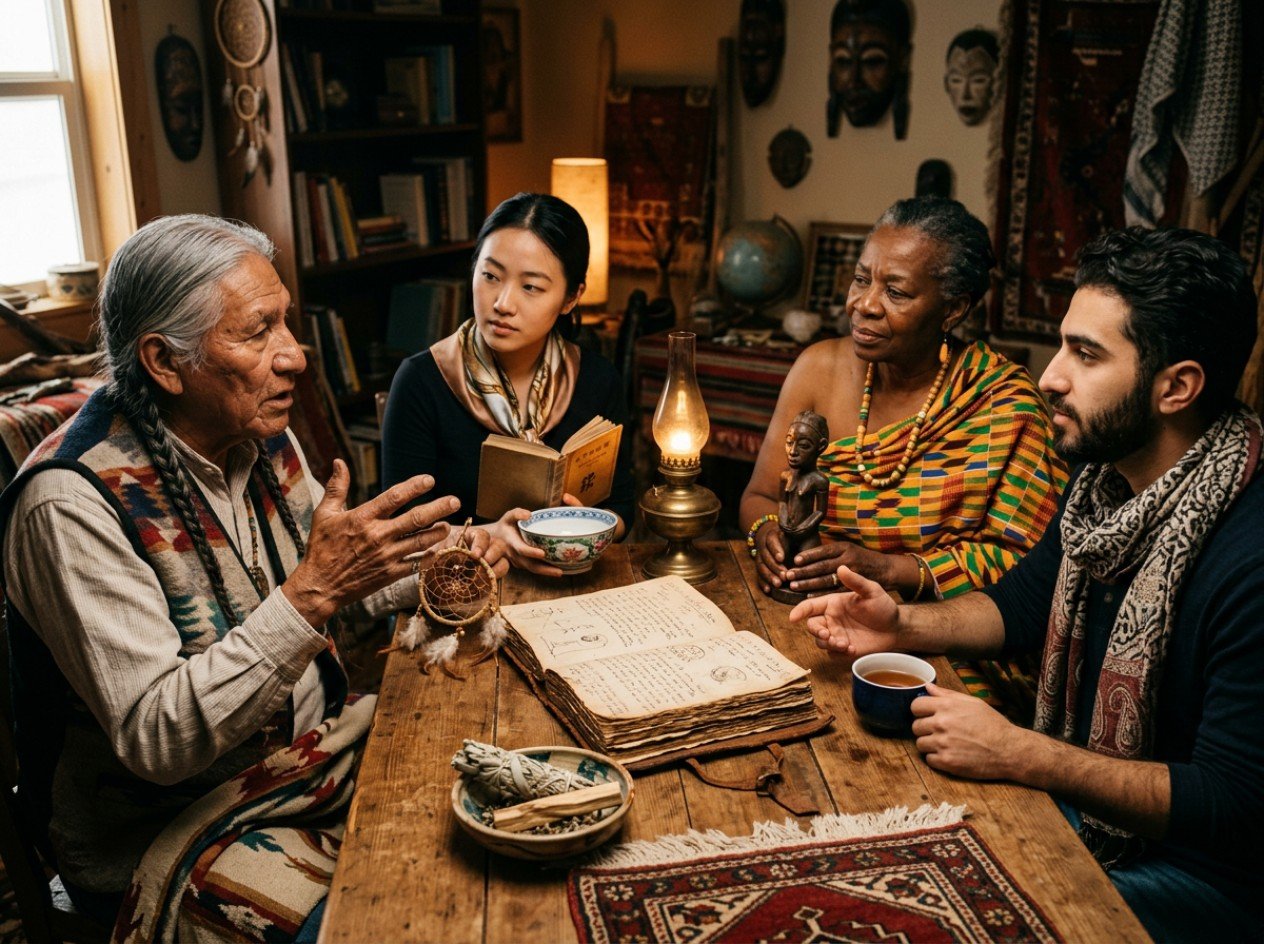
One of the greatest privileges of my younger years was having the opportunity to travel extensively. Long before I settled on the West Coast, I spent months at a time exploring Asia, North Africa, South America, Europe, and the Middle East. I quickly discovered that while people spoke different languages, ate different foods, and worshipped in different ways, there was one experience almost everyone shared and that was dreams. Whether I was sitting with a Buddhist monk in northern Thailand, drinking mint tea with a family in Morocco, listening to Indigenous elders in Peru, or talking with university students in Scotland, people spoke about dreams with a mixture of curiosity, respect, humour, and sometimes even awe. Those conversations convinced me that dreams occupy a unique place in the human experience. They are universal, yet the meanings we assign to them are deeply shaped by culture. As both anthropology and psychology remind us, dreams tell us as much about the societies that interpret them as they do about the individuals who experience them.
Anthropologists have long recognised that dreams provide a fascinating window into cultural values. Every society develops systems for explaining experiences that seem mysterious or difficult to understand. Dreams naturally invite interpretation because they blur the boundaries between memory, imagination, emotion, and perception. The questions people ask about dreams—Where do they come from? What do they mean? Should they be trusted?—often reflect much broader beliefs about religion, identity, nature, and the relationship between the visible and invisible worlds.
In many Indigenous cultures, dreams have traditionally been regarded as meaningful communications rather than random mental activity. Among numerous Native American communities, for example, dreams were often understood as opportunities to receive guidance from ancestors, spirits, or the natural world. Young people sometimes undertook vision quests involving solitude, fasting, and prayer, hoping to receive dreams that would help reveal their purpose within the community. The exact traditions varied enormously between different nations, but a common theme emerged: dreams were viewed not merely as private experiences but as valuable sources of wisdom connected to both individual identity and communal wellbeing.
Travelling through Peru many years ago, I encountered similar attitudes among Indigenous communities in the Andes. Dreams were frequently discussed alongside observations of nature, family relationships, and spiritual practice. Rather than separating the physical and spiritual worlds as sharply as modern Western thought sometimes does, dreams were often understood as existing within a broader web of relationships connecting people, ancestors, animals, landscapes, and sacred places. From an anthropological perspective, this reflects what scholars often describe as a relational worldview, in which individuals understand themselves as deeply interconnected with both their community and the natural environment.
Traditional Chinese culture has also attributed considerable significance to dreams for thousands of years. Ancient Chinese texts often interpreted dreams in relation to harmony, balance, health, and the movement of vital energy known as Qi. Influenced by Daoist and later Buddhist ideas, dreams sometimes represented reflections of one's inner state rather than fixed predictions of future events. Rather than asking simply, "What will happen?" interpreters might ask, "What is this dream revealing about my current balance?" This emphasis upon harmony mirrors broader Chinese philosophical traditions that value equilibrium between complementary forces such as Yin and Yang.
In India, dreams have occupied an important place within both Hindu and Buddhist thought. Ancient Hindu scriptures such as the Upanishads explored dreaming as one of several states of consciousness, alongside waking, deep sleep, and ultimately higher states of spiritual awareness. Dreams became opportunities to reflect upon the nature of reality itself. Rather than dismissing dreams as illusions, philosophers sometimes used them to illustrate broader questions about perception and consciousness. Buddhism likewise encourages careful observation of mental experience, although many Buddhist traditions emphasise that dreams, like waking thoughts, are impermanent phenomena that should be approached with mindful awareness rather than attachment.
Dreams & The Abrahamic Religions
The Abrahamic religions have also assigned considerable importance to dreams. The Hebrew Bible contains numerous accounts in which dreams communicate divine guidance. Joseph interprets Pharaoh's dreams, while Jacob dreams of a ladder reaching heaven. In Christianity, dreams appear during pivotal moments, including Joseph's guidance regarding the birth of Jesus. Islamic tradition similarly contains many respected accounts of meaningful dreams, and classical Muslim scholars developed sophisticated approaches for interpreting them while cautioning against assuming that every dream possessed prophetic significance. Across all three traditions, discernment remained essential. Dreams could inspire reflection, but they required careful interpretation within broader religious and ethical frameworks.
When I first visited Morocco, I was fascinated by how naturally conversations about dreams emerged during ordinary social gatherings. People often distinguished between everyday dreams influenced by daily events and those believed to contain deeper spiritual significance. This careful distinction reminded me that many cultures avoid simplistic conclusions. Rather than assuming every dream predicts the future or carries divine authority, they recognise varying levels of meaning depending upon context, character, and circumstance.
Ancient Greece approached dreams from yet another perspective. Temples dedicated to Asclepius, the god of healing, welcomed individuals seeking physical or emotional recovery. Patients participated in rituals before sleeping within the temple, hoping to receive healing dreams that priests would later help interpret. Here we see dreams functioning simultaneously as religious experiences, therapeutic tools, and sources of practical guidance. Modern psychology might describe these practices differently, yet they demonstrate humanity's longstanding belief that dreams can contribute to wellbeing.
The rise of psychology during the late nineteenth and early twentieth centuries introduced new approaches to dream interpretation. Sigmund Freud famously argued that dreams represented disguised expressions of unconscious wishes and unresolved conflicts. Carl Jung developed a broader symbolic framework, suggesting that dreams reflected universal archetypes shared across humanity while also addressing the individual's ongoing psychological development. Unlike many earlier traditions that emphasised external spiritual messages, psychology shifted attention inward toward the unconscious mind. Interestingly, this transition did not eliminate mystery but relocated it from the heavens to the depths of human consciousness.
Anthropologists have often pointed out that neither scientific nor spiritual explanations fully replace one another because they answer somewhat different questions. Neuroscience investigates how dreams occur within the brain, psychology explores their relationship with cognition and emotion, while cultural anthropology examines how societies assign meaning to dreaming. Rather than competing explanations, these approaches frequently complement one another by illuminating different dimensions of the same human experience.
Common Dream Themes Across Cultures
One of the most striking anthropological observations is that although dream interpretations vary enormously, several common themes appear repeatedly across cultures. Transformation is perhaps the most universal. Dreams frequently accompany periods of transition such as adolescence, marriage, parenthood, illness, grief, or ageing. Whether interpreted spiritually or psychologically, dreams often seem to help individuals navigate change by exploring fears, hopes, and possibilities.
Another recurring theme is guidance. In some societies, guidance comes from ancestors or divine beings. In others, it emerges from the unconscious mind. Although the source differs according to cultural belief, the underlying function remains remarkably similar. Dreams become opportunities for reflection during moments of uncertainty. They encourage people to pause before making important decisions and to consider perspectives they may have overlooked while awake. Relationships also appear consistently throughout dream traditions worldwide. Dreams frequently involve family members, friends, strangers, animals, or deceased loved ones. Anthropologists suggest this reflects the fundamentally social nature of human life. We are relational beings, and our dreams naturally mirror the emotional networks that shape our identities. Whether viewed as spiritual encounters or psychological representations, relationships remain central to dream experience across cultures.Nature occupies another prominent place. Mountains, rivers, forests, birds, snakes, storms, and celestial bodies appear repeatedly in dream traditions from every continent. These symbols often reflect the environments in which people live. Coastal communities may dream of oceans, desert cultures of sand and stars, agricultural societies of harvests and animals. Anthropologists recognise that dreams are not created in isolation but emerge within specific ecological and cultural landscapes that influence symbolic meaning.
Despite these commonalities, significant differences remain. Individualistic societies, particularly in much of the modern West, often interpret dreams as expressions of personal psychology and individual identity. More collectivist cultures may place greater emphasis upon family, ancestors, or communal responsibility. Neither approach is inherently superior. Rather, each reflects broader cultural assumptions about what it means to be human and how individuals relate to the communities around them.
One lesson my travels taught me is that humility is essential when discussing dreams. It is remarkably easy to assume our own cultural interpretation is universal when, in reality, it represents only one perspective among many. Anthropology encourages us to approach different traditions with curiosity rather than judgement. Instead of asking whether another culture's interpretation is right or wrong, we might ask what it reveals about that society's values, beliefs, and understanding of human existence. That shift in perspective transforms dream interpretation into an opportunity for cross-cultural learning.
Dreams remind us that although humanity is wonderfully diverse, we also share profound common experiences. Every culture dreams. Every society seeks meaning. Every generation asks questions about identity, purpose, mortality, love, and hope. Dreams become one of the many ways we explore those enduring mysteries. Whether understood as messages from the Divine, conversations with ancestors, reflections of the unconscious, or simply the remarkable creativity of the sleeping brain, dreams continue to connect us across continents and centuries. For me, that may be their greatest gift. They reveal not only the astonishing diversity of human cultures but also the shared curiosity that unites us all, a quiet reminder that beneath our many differences, we remain fellow travellers trying to understand both ourselves and the mysterious world we inhabit.