
Astrology & Mysticism
For thousands of years, people have looked up at the night sky with a sense of wonder. The movements of the Sun, Moon, planets, and stars have inspired stories, shaped calendars, guided explorers, and influenced spiritual traditions across countless civilizations. Long before telescopes revealed the vastness of the universe, ancient cultures believed that the heavens reflected patterns and rhythms that were also present within human life. This belief became the foundation of astrology, one of the world's oldest symbolic systems and one that continues to fascinate people today. When combined with mysticism, astrology becomes more than the study of celestial movements—it becomes a language through which many seek greater self-understanding and spiritual insight.
Astrology is often misunderstood by many as simply predicting the future/fortune-telling, yet its traditional purpose has always been far broader than this. At its heart, astrology is a symbolic framework that explores the relationship between celestial cycles and human experience. Rather than claiming that the planets force events to happen, many modern astrologers view them as symbolic markers that reflect particular energies, themes, or opportunities. In this sense, astrology encourages reflection rather than certainty, inviting us to consider how cosmic rhythms might correspond with the rhythms of our own lives.
Mysticism shares a similar perspective. Throughout history, mystics have sought to understand the deeper connections that unite the visible and invisible aspects of existence. Whether through meditation, contemplation, sacred texts, or symbolic traditions, mysticism encourages us to look beyond appearances and ask deeper questions about meaning, purpose, and the nature of reality. Astrology fits naturally within this tradition because it uses symbols rather than fixed answers, encouraging thoughtful exploration instead of rigid conclusions.
The Origins of Astrology
The origins of astrology stretch back more than four thousand years. Ancient civilizations in Mesopotamia carefully observed the heavens, recording planetary movements and lunar cycles whilst seeking patterns that might help them understand seasonal changes and significant events. These early observations gradually developed into sophisticated systems that influenced Egyptian, Greek, Roman, Persian, Indian, Chinese, and Islamic scholars. Each culture contributed its own interpretations whilst preserving the central idea that the cosmos reflects an underlying order.
One of the reasons astrology has endured for so long is due to its remarkable symbolic richness. Every planet represents particular themes within human experience. The Sun is associated with identity, purpose, and vitality. The Moon reflects emotions, intuition, and our inner world. Mercury governs communication and learning, whilst Venus symbolizes love, beauty, and relationships. Mars represents action and determination, Jupiter expansion and opportunity, Saturn responsibility and discipline, Uranus innovation, Neptune imagination, and Pluto transformation. These symbolic associations allow astrologers to examine life's many dimensions through an interconnected framework.
The zodiac signs provide another important layer of symbolism. Each of the twelve signs expresses a unique way of engaging with the world. Aries represents initiative and courage, Taurus stability and perseverance, Gemini curiosity and communication, Cancer emotional connection, Leo creativity and confidence, Virgo practical wisdom, Libra harmony and relationships, Scorpio transformation, Sagittarius exploration, Capricorn ambition, Aquarius innovation, and Pisces imagination and compassion. Rather than placing people into rigid categories, these signs represent different qualities that may appear in varying degrees throughout every birth chart.
Birth Charts
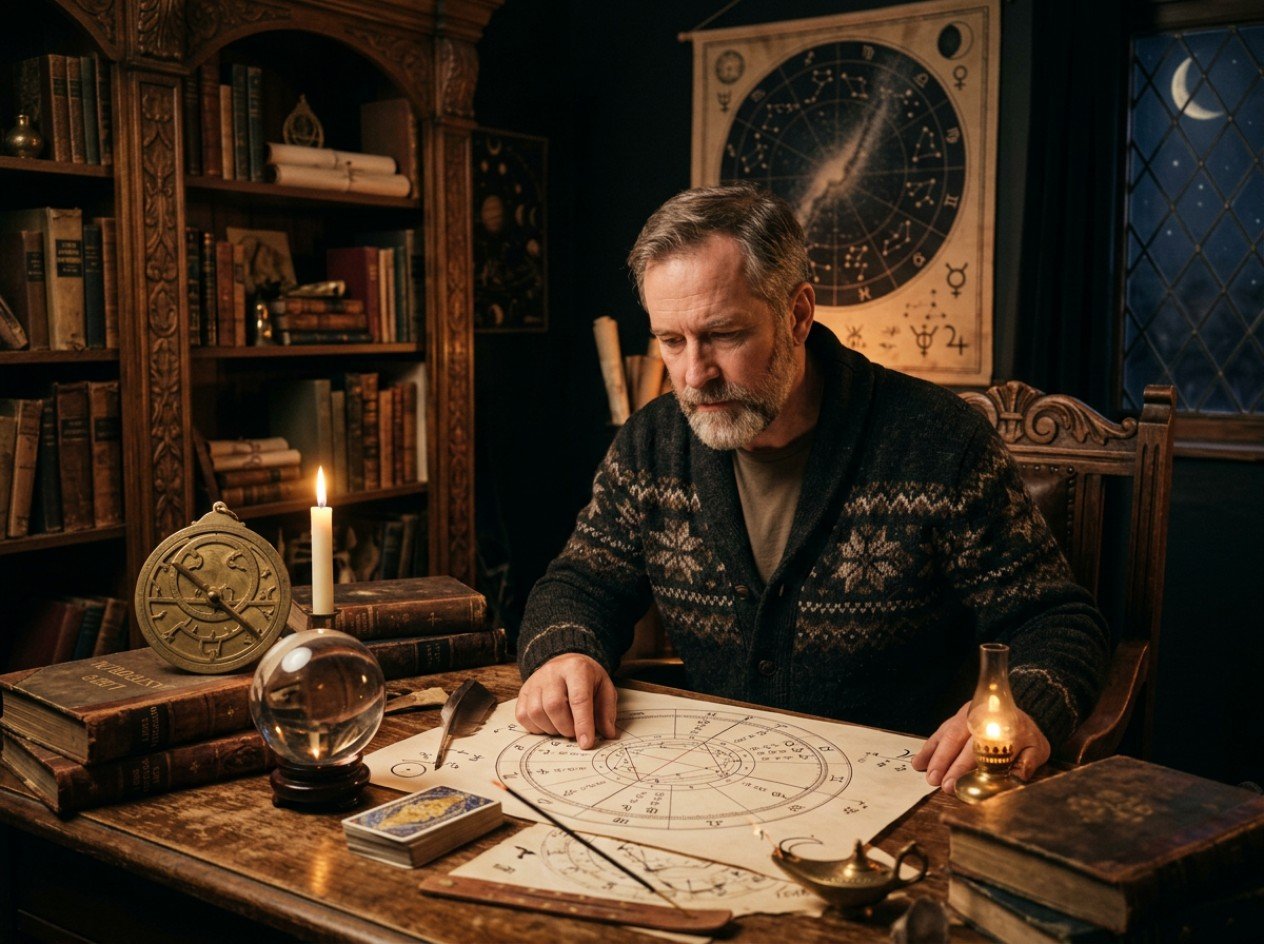
Perhaps the most personal aspect of astrology is the birth chart, sometimes called the natal chart. Created using the exact time, date, and location of a person's birth, it provides a symbolic snapshot of the heavens at that particular moment. Many astrologers view the birth chart as a map of potential rather than a fixed destiny. It highlights strengths, challenges, preferences, and opportunities for growth whilst reminding us that every individual retains the freedom to make choices throughout life.
The Moon occupies a particularly significant place in both astrology and mysticism. Because it moves through the zodiac approximately every twenty-eight days, it reflects the changing rhythms of emotion, intuition, and everyday experience. Many people enjoy following the Moon's journey through the signs, observing how different lunar phases encourage reflection, action, release, or renewal. Full Moons often symbolize culmination and illumination, whilst New Moons represent fresh beginnings and setting intentions. These cycles provide natural opportunities to pause and reconnect with ourselves.
Mysticism encourages us to view these celestial movements not as forces controlling our lives but as reminders of the interconnected rhythms found throughout nature. Just as the tides respond to the Moon and the seasons follow the Earth's journey around the Sun, many mystical traditions suggest that human beings also experience cycles of growth, rest, challenge, and renewal. Astrology offers a symbolic language for contemplating these recurring patterns.
One reason astrology continues to resonate with so many people is its emphasis on self-awareness. Reading about your birth chart or following current planetary movements often encourages questions such as, "What motivates me?", "How do I respond to challenges?", "Which relationships help me grow?", "Where might I benefit from greater balance?" etc. These questions do not require belief in fate or supernatural influence. Instead, they invite thoughtful reflection that can complement psychological, philosophical, or spiritual approaches to personal development.
Many people also integrate astrology with other mystical practices such as meditation, Tarot, dream interpretation, journaling, mindfulness, or numerology. A New Moon may inspire someone to write down personal goals, whilst a Full Moon becomes an opportunity to reflect upon achievements and release habits that no longer serve them. Others may combine planetary symbolism with meditation or use astrology alongside dream journals as a framework for observing recurring themes within their lives. In each case, astrology becomes less about prediction and more about cultivating awareness.
Throughout history, astrology has often existed alongside philosophy, astronomy, mathematics, and religion. Medieval scholars carefully calculated planetary movements whilst Renaissance thinkers explored the relationship between celestial harmony and human creativity. Although modern astronomy and astrology have become distinct disciplines, both share humanity's enduring fascination with the heavens. Astronomy seeks to understand the physical universe through observation and scientific investigation, whilst astrology explores the symbolic meanings that people have associated with the sky throughout history.
It is important to approach astrology with both curiosity and discernment. Different astrologers hold different perspectives, and interpretations naturally vary between traditions. Rather than viewing astrology as providing absolute certainty, many people find its greatest value lies in the conversations it inspires about personality, relationships, timing, and personal growth. Like mythology, literature, or dreams, astrology offers a symbolic language that encourages reflection rather than unquestioning acceptance.
Perhaps this symbolic quality explains why astrology remains closely connected with mysticism. Both invite us to embrace mystery rather than eliminate it. They remind us that whilst knowledge is valuable, wisdom often comes from learning to observe, reflect, and remain open to life's deeper questions. The stars may not provide every answer, but they have inspired countless generations to think more deeply about their place within the universe.
Ultimately, astrology and mysticism encourage us to see life as an ongoing journey of discovery. They remind us that every season has its purpose, every challenge offers opportunities for growth, and every individual possesses the capacity to learn, adapt, and evolve. Whether you approach astrology as a spiritual practice, a philosophical framework, or simply a fascinating symbolic tradition, its greatest gift may be the way it inspires us to become more mindful of ourselves and the world around us. By lifting our eyes to the heavens, we are often gently reminded to look more carefully within ourselves, where some of life's most meaningful discoveries quietly await.