
Slow & Fast Moving Planets & How They Affect Us
One of the defining characteristics of modern astrology is its recognition that not all planets operate on the same timescale. Some move rapidly through the zodiac, producing influences that are brief, dynamic, and often felt in the rhythm of everyday life. Others move so slowly that they shape entire generations, reflecting long-term themes of cultural development and personal transformation. Understanding the distinction between the fast-moving and slow-moving planets is fundamental to interpreting an astrological chart with nuance and balance. Too often, beginning students of astrology focus exclusively on today's planetary positions without appreciating the different levels at which planetary symbolism operates. A mature astrological interpretation recognises that daily experiences arise from the interaction between immediate influences and much longer developmental cycles.
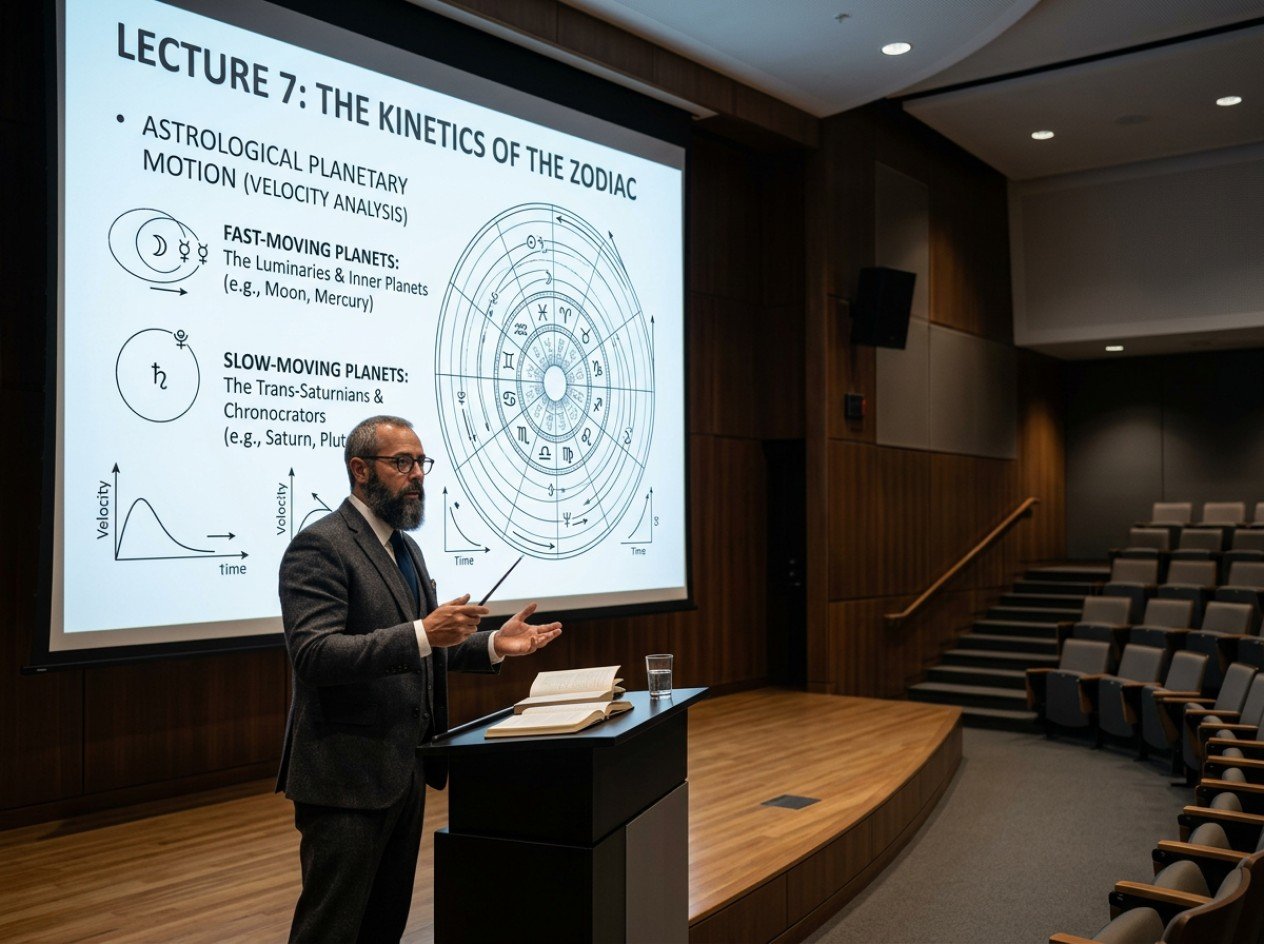
The planets traditionally fall into two broad categories. The fast-moving planets include the Moon, Mercury, Venus, Mars, and to some extent the Sun, although technically the Sun is not a planet in astronomical terms. These bodies move relatively quickly through the zodiac, producing frequent changes in mood, communication, relationships, motivation, and daily experience. The slow-moving planets, Jupiter, Saturn, Uranus, Neptune, and Pluto, remain in each zodiac sign for considerably longer periods, symbolising broader processes of growth, limitation, innovation, spiritual development, and transformation.
This distinction reflects an important principle within astrology itself. Human life unfolds simultaneously across multiple timescales. We experience changing emotions throughout a single day, evolving relationships across years, career development over decades, and profound psychological transformation over an entire lifetime. Astrology attempts to provide a symbolic language capable of describing these different layers of experience without reducing them to a single explanation.
The Movement Of The Moon
The Moon represents the fastest moving body commonly used in natal and daily astrology, travelling through all twelve zodiac signs in approximately twenty-seven and a half days. Remaining in each sign for roughly two and a half days, the Moon symbolises our emotional landscape, instincts, habits, and immediate psychological responses. Many astrologers regard the Moon as particularly relevant for understanding the emotional atmosphere surrounding a given day. A Moon travelling through Cancer may symbolically encourage attention toward home, family, and emotional security, whilst a Moon in Sagittarius is often interpreted as favouring exploration, optimism, and intellectual curiosity.
Because the Moon changes signs so frequently, its symbolism should generally be understood as influencing temporary moods rather than permanent personality characteristics. One day's heightened emotional sensitivity rarely defines an entire year. Consequently, experienced astrologers often encourage clients to work with the Moon rather than against it. Days associated symbolically with introspection may be well suited to reflection, whilst periods emphasising sociability might favour collaboration and communication.
The Movement Of The Moon, Mercury, Venus & Mars
Mercury, completing its journey around the zodiac in approximately one year, governs communication, learning, analysis, commerce, and intellectual activity. Although Mercury changes signs every few weeks, its influence is often noticed most clearly during its well-known retrograde periods. Astrologically, Mercury retrograde has become associated with reviewing, revising, correcting, and reflecting rather than initiating major commitments. Whilst popular culture sometimes exaggerates these periods dramatically, traditional astrology generally encourages flexibility rather than alarm. Delays or misunderstandings become invitations for greater care rather than predictions of inevitable failure.
Venus moves through the zodiac in roughly one year as well, symbolising relationships, beauty, harmony, pleasure, artistic appreciation, and personal values. As Venus changes signs, astrologers interpret subtle shifts in how affection, creativity, diplomacy, and aesthetics are expressed. Daily interpretation often focuses upon opportunities for improving relationships, appreciating beauty, resolving conflict gently, or reconnecting with activities that bring genuine enjoyment.
Mars completes its cycle through the zodiac in approximately two years. Traditionally associated with energy, courage, determination, ambition, and conflict, Mars reflects how individuals pursue goals and respond to challenges. During periods when Mars forms significant aspects or changes signs, astrologers frequently discuss themes involving motivation, initiative, assertiveness, and physical activity. Once again, these influences are generally understood as encouraging awareness rather than determining behaviour.
Together, the Moon, Mercury, Venus, and Mars create much of the day-to-day texture encountered within astrology. Their relatively rapid movement means that the symbolic atmosphere changes continually. Daily horoscopes naturally emphasise these faster bodies because their positions shift often enough to create noticeable differences from one day to the next.
Jupiter introduces a very different rhythm. Remaining in each zodiac sign for approximately one year and completing its entire cycle in about twelve years, Jupiter symbolises growth, education, philosophy, opportunity, optimism, travel, and expansion. Whereas the Moon may describe today's emotional climate, Jupiter often reflects the broader themes characterising an entire year of personal development. Many astrologers encourage clients to consider Jupiter when asking questions concerning long-term learning, professional growth, higher education, publishing, or expanding one's understanding of life.
Jupiter's symbolism also illustrates an important interpretive principle. Expansion itself is neither inherently positive nor negative. Healthy confidence may develop alongside excessive optimism if caution is neglected. Consequently, Jupiter is often interpreted most constructively when balanced by thoughtful planning and realistic expectations.
Saturn, requiring approximately twenty-nine and a half years to complete its journey through the zodiac, occupies an especially significant place within astrology. Frequently described as the teacher or taskmaster of the solar system, Saturn symbolises discipline, structure, responsibility, maturity, boundaries, and long-term achievement. Saturn's transits often correspond symbolically with periods demanding patience, persistence, and careful effort. Whilst some people initially fear Saturn because of its association with limitation, experienced astrologers frequently regard it as representing sustainable growth built through consistent commitment.
The Saturn Return
Perhaps the best-known Saturn cycle is the Saturn Return, occurring roughly between the ages of twenty-eight and thirty, and again near fifty-eight to sixty years of age. These periods are commonly interpreted as important developmental milestones involving reassessment of career, relationships, identity, and long-term priorities. Whether viewed symbolically or psychologically, they encourage reflection upon how one wishes to build the next stage of life.
The outer planets—Uranus, Neptune, and Pluto—operate on still longer timescales. Uranus remains within each zodiac sign for approximately seven years, completing its full orbit in eighty-four years. Associated with innovation, originality, independence, technology, reform, and unexpected change, Uranus often symbolises periods when established patterns require revision. Individuals experiencing significant Uranian transits may feel drawn toward greater authenticity or unconventional approaches to longstanding challenges.
Neptune spends approximately fourteen years in each zodiac sign, requiring around one hundred and sixty-five years to complete its orbit. Traditionally associated with spirituality, imagination, compassion, dreams, intuition, idealism, and artistic inspiration, Neptune often reflects subtle psychological and cultural influences rather than immediately observable events. Its symbolism encourages sensitivity, creativity, and transcendence while also reminding astrologers to remain aware of illusion, confusion, or unrealistic expectations.
Pluto moves even more slowly, spending between twelve and thirty years in a single zodiac sign depending upon its highly elliptical orbit. Completing one full revolution in approximately two hundred and forty-eight years, Pluto symbolises profound transformation, regeneration, power, psychological depth, endings, and renewal. Because Pluto remains within one sign for many years, entire generations often share the same Plutonian placement. Consequently, Pluto frequently appears in astrology as a marker of collective rather than purely individual transformation.
This distinction introduces another important interpretive principle. Fast-moving planets describe immediate experiences. Slow-moving planets describe deeper developmental processes unfolding gradually across years or decades. A single day's emotional frustration reflected symbolically by the Moon differs fundamentally from a decade-long process of personal reinvention associated with Pluto. Confusing these different levels often leads to exaggerated interpretations.
Astrologers frequently compare the planets to weather systems operating at different scales. The Moon resembles today's local weather—constantly changing and immediately noticeable. Mercury, Venus, and Mars resemble weekly patterns influencing everyday activity. Jupiter and Saturn resemble changing seasons shaping longer phases of life. Uranus, Neptune, and Pluto resemble climate itself, slowly transforming the larger environment within which individual experiences unfold.
Daily astrology therefore benefits from proportional interpretation. If the Moon encourages introspection today, one need not postpone important life decisions indefinitely. Likewise, if Saturn symbolically invites greater responsibility during the coming year, every single day need not feel burdensome. Effective astrology balances immediate symbolism with broader developmental context.
Modern psychological astrology has increasingly emphasised this layered approach. Rather than predicting isolated events, contemporary astrologers often explore how different planetary cycles interact with ongoing processes of personal growth. Daily transits become opportunities for greater awareness rather than rigid predictions. Long-term planetary movements invite reflection upon enduring themes such as identity, purpose, vocation, relationships, and spiritual development.
It is also important to recognise the limitations of astrological interpretation. Astrology is generally understood by practitioners as a symbolic framework rather than a scientifically established mechanism for predicting future events. Its value often lies in encouraging reflection, self-examination, and thoughtful decision-making rather than replacing practical judgement or empirical evidence. Many individuals find astrology meaningful as a language for contemplating life's rhythms, whilst others remain unconvinced of its underlying assumptions. Both perspectives deserve respectful consideration.
Ultimately, understanding the distinction between fast-moving and slow-moving planets enriches astrological interpretation by placing daily experiences within broader patterns of development. The rapidly changing inner planets remind us that emotions, conversations, relationships, and motivations continually evolve. The slower outer planets encourage patience, recognising that profound transformation rarely occurs overnight. Together, they suggest a vision of human life unfolding simultaneously through moments and decades, immediate choices and lifelong journeys. Whether one approaches astrology as symbolic philosophy, spiritual reflection, or personal mythology, this layered understanding encourages balance, perspective, and thoughtful engagement with both the small decisions of today and the larger story gradually unfolding across the years.